Estimated reading time: 10 minutes
Build Your Site With WordPress.com
WordPress.com combines WordPress, hosting, security, updates and site management in one platform. It can be a convenient option for creators, bloggers and small businesses that want a simpler way to launch and manage a website.
Explore WordPress.com →Affiliate disclosure: TechnofluxAI may earn a commission if you make a qualifying purchase through this link, at no extra cost to you.
TechnofluxAI Guide
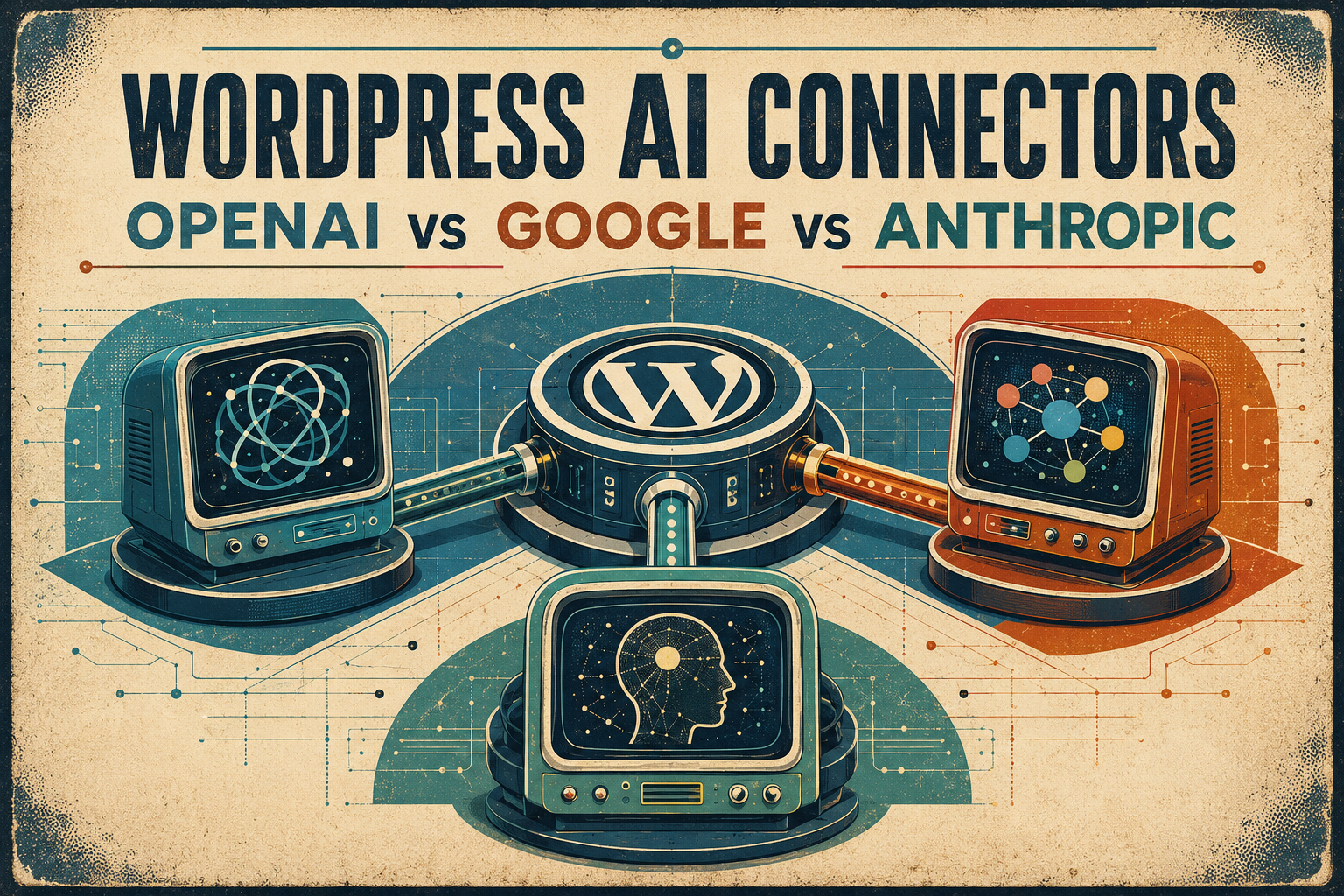
AI Connectors: OpenAI vs Google vs Anthropic
AI connectors are becoming the bridge between your content, apps, files, website, automations, and AI assistant. Deciding whether connectors matter is not the hard part. The real challenge is choosing which AI ecosystem fits the way you actually work.
Quick Answer
Choose OpenAI if you want flexible assistant workflows, custom GPT-style experiences, and strong creator automation. Google fits best when your work lives inside Search, Workspace, Maps, YouTube, Drive, and Google Cloud. Anthropic makes sense if you want a clean MCP-first connector model with a strong focus on controlled tool access and business workflows.
The Pain Point
Most creators are not trying to build a giant AI company. They need AI to read the right files, connect to the right tools, create better content, update workflows, and save time without turning every task into a developer project.
What This Guide Will Help You Understand
This article compares OpenAI, Google, and Anthropic from a practical creator point of view: what their connectors are good at, where each ecosystem feels strongest, and how to think about them for WordPress, content production, client workflows, internal knowledge, and automation.
You will also learn a simple decision framework: whether your workflow needs an AI writing and workflow engine, a Google-native research and productivity layer, or an MCP-centered business assistant that connects cleanly to approved tools.
Start Here
Before comparing features, write down your main workflow: content creation, research, coding, customer support, document analysis, website automation, or business operations. The best connector plugs into that workflow with the least friction.
Explore More AI Tool Guides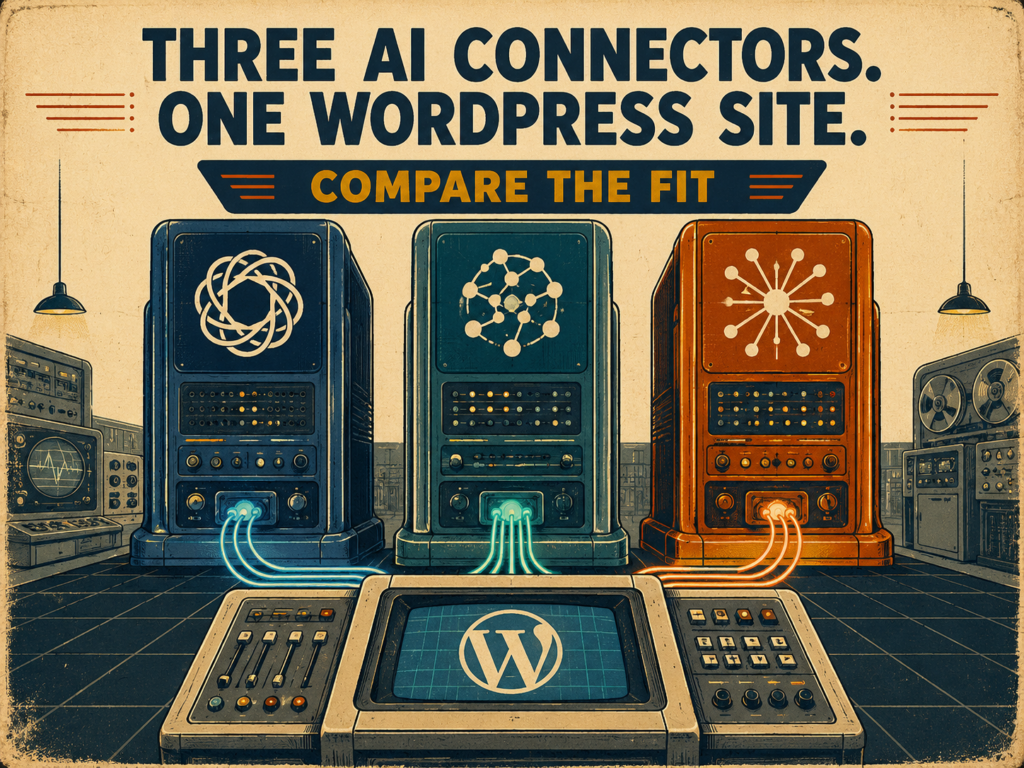
Main Comparison
What Are AI Connectors?
AI connectors let an AI model interact with external tools, files, apps, APIs, databases, or workflows. Instead of only answering from a prompt, the AI can pull context from approved systems, run actions, search files, create drafts, update records, or trigger steps in a larger workflow.
OpenAI Connectors
OpenAI is strong when you want creator-friendly AI workflows, custom assistant behavior, internal apps, content systems, and flexible automation. It is especially attractive if you already use ChatGPT as your daily writing, planning, coding, research, or productivity hub.
- Good for custom GPT-style workflows
- Useful for content teams and internal knowledge tools
- Strong fit for creators who want AI inside repeatable workflows
- Works well when paired with APIs, apps, and structured actions
Google Gemini Connectors
Google is strongest when your workflow depends on Google Search, Google Workspace, Google Drive, Gmail, Docs, Sheets, Maps, YouTube, or Google Cloud. Gemini is a natural fit for people who already run their business inside the Google ecosystem.
- Good for Google-native productivity
- Useful for research, files, workspace tasks, and cloud workflows
- Strong fit for teams already using Google accounts and apps
- Helpful for combining search-style grounding with custom tools
Anthropic Claude Connectors
Anthropic is especially interesting because Claude connectors are closely tied to MCP, the Model Context Protocol. This structure gives businesses and builders a cleaner way to think about tool access, permissions, and connecting Claude to approved systems.
- Good for MCP-based connector design
- Useful for document-heavy and business workflows
- Strong fit for teams that care about controlled tool access
- Helpful for connecting Claude to internal systems and approved apps
OpenAI vs Google vs Anthropic: Practical Comparison
Best for Content Creators
OpenAI usually feels the most natural for creators who want repeatable writing systems, brand voice workflows, blog production, content planning, and custom AI assistants.
Best for Google Workflows
Google is the obvious choice when your content calendar, research files, spreadsheets, docs, email, analytics, and team workspace already live inside Google tools.
Best for MCP Structure
Anthropic is a strong option when you want an MCP-centered approach and cleaner boundaries between the AI assistant, connected tools, permissions, and business systems.
Best for WordPress Builders
WordPress users should choose based on the publishing workflow: OpenAI for content systems, Google for workspace-connected research, and Anthropic for structured document and tool workflows.
How To Choose the Right AI Connector
Start with the job, not the brand.
Do you need the AI to write posts, read files, search internal docs, summarize meetings, update spreadsheets, generate code, or trigger business automations?
Map where your data already lives.
If your knowledge is in Google Drive, Gemini may reduce friction. Custom workflows may be easier to shape with OpenAI. For MCP-style tool boundaries, Claude deserves a serious look.
Check permissions before features.
A connector that can access too much too quickly can create risk. Look for permission controls, approval steps, admin settings, audit options, and clear data boundaries.
Test one small workflow first.
Do not connect everything on day one. Start with a single workflow, such as turning a Google Doc brief into a WordPress article draft, summarizing support tickets, or creating a weekly content plan from internal notes.
Warning: Do Not Choose Connectors Based on Hype
The wrong connector choice usually happens when someone picks the trendiest AI model instead of the workflow that needs support. A powerful connector is only useful if it can reach the right information, respect the right permissions, and finish the job without creating extra cleanup work.
Advanced Implementation
How To Use AI Connectors Without Creating Chaos
The best AI connector setup is boring in the right way. It has clear permissions, predictable workflows, limited access, clean prompts, and a human review step for anything that affects publishing, customers, payments, private data, or website changes.
Creator Setup
Use OpenAI or Gemini to connect research notes, drafts, outlines, keyword ideas, and publishing workflows. Keep final editing inside WordPress so your brand voice and formatting stay consistent.
Business Setup
Use connectors for repeatable internal workflows like weekly summaries, CRM notes, client briefs, content calendars, document search, and task updates. Keep destructive actions behind review.
Developer Setup
Use MCP servers, custom tools, APIs, or function calling when you need controlled access to private systems. Document every tool name, permission, failure state, and approval rule.
Common Mistakes To Avoid
Mistake 1: Connecting everything at once
Start with one workflow. Too many connections make it harder to debug mistakes, manage permissions, and understand where an answer came from.
Mistake 2: Skipping human review
AI can draft, summarize, and suggest. Human review still matters for anything that goes live, affects customers, changes data, or represents your brand.
Mistake 3: Ignoring source quality
A connector is not magic. Outdated, messy, duplicated, or poorly named files will still make the AI struggle to produce clean output.
Mistake 4: Choosing the model before the workflow
The real question is not “Which AI is best?” A better question is “Which AI connects to the work I need done with the least friction and the safest controls?”
FAQ: AI Connectors
What is an AI connector?
An AI connector is a bridge between an AI assistant and an outside tool, app, file source, database, or workflow. It helps the AI use approved information instead of relying only on the text you type into the prompt.
Which AI connector is best for WordPress?
For most WordPress creators, OpenAI is a strong starting point for content production and assistant-style workflows. Google is better when your content research and documents live inside Google tools. Anthropic is worth considering when you want MCP-focused workflows and careful tool access.
Is MCP the same as an AI connector?
Not exactly. MCP is a protocol that can power connector-style access between AI systems and external tools. A connector is the practical connection users interact with. The protocol is one way to build that connection in a more standardized way.
Should beginners use AI connectors?
Yes, but beginners should start small. Connect one safe source, test one workflow, review every result, and avoid giving AI permission to make irreversible changes until the process is proven.
Can AI connectors replace automation tools?
Sometimes they can replace simple automation steps, but they are usually better as an intelligence layer. Use connectors to understand, summarize, draft, decide, and prepare actions. Automation tools are still better for predictable triggers, approvals, and repeatable execution.
Final Takeaway
OpenAI, Google, and Anthropic are not just competing models. Each one is becoming part of a different connector ecosystem. OpenAI feels strong for flexible creator workflows. Google fits Workspace-native productivity and search-connected tasks. Anthropic stands out for MCP-centered business connections and controlled tool access. The best choice is the one that connects to your real work without making your workflow harder to manage.
Build Your AI Workflow Stack
If you are building a WordPress site, blog, content brand, or AI-powered business workflow, start with one connector, one repeatable task, and one review process. This simple setup will teach you more than chasing every new AI feature.
Plan Your AI Workflow