

Estimated reading time: 7 minutes
TechnofluxAI Content Strategy
How to Add Better FAQs to AI-Assisted Blog Posts
A strong FAQ section can make an AI-assisted blog post more useful, more searchable, and easier for readers to trust. The mistake is treating FAQs like a quick add-on instead of using them to answer the exact questions people still have before they click, subscribe, buy, book, or keep reading.
Quick Answer
To add better FAQs to AI-assisted blog posts, start with real reader questions, cover missing details from the article, keep answers direct, include practical examples, avoid fake questions, and use the FAQ section to support both traditional SEO and AI-powered search results.
The Common Problem
Many AI-assisted posts end with weak FAQs that feel copied, obvious, or disconnected from the article. They repeat the heading, answer questions nobody asked, or add filler just to make the post look longer.
What This Helps You Fix
You’ll learn how to build FAQ sections that clarify the topic, target search intent, support generative AI visibility, and give readers fast answers without making the blog post feel bloated.
Better FAQs Start After the Draft, Not Before It
The best time to create FAQs is after the main article is drafted. That is when you can see what the post explains well, what it only mentions briefly, and what questions a reader may still have before trusting the advice.
Explore More AI Blogging Guides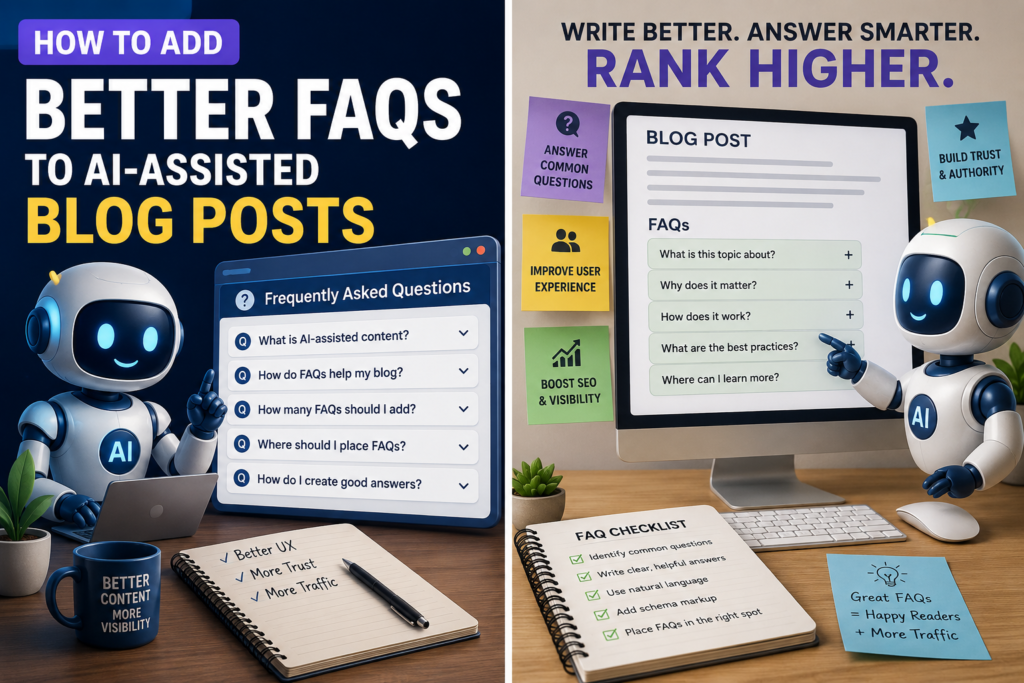
FAQ Optimization Workflow
How to Build FAQs That Make AI-Assisted Posts More Helpful
AI can generate FAQ ideas quickly, but it needs direction. Better FAQs come from search intent, reader objections, topic gaps, and real questions people ask before taking the next step.
1. Start With the Reader’s Next Question
A good FAQ answers what the reader is likely thinking after reading the article. It should not simply repeat the same points from the main content.
- What still feels unclear?
- What might stop the reader from acting?
- What would a beginner ask next?
- What detail was too small for a full section?
2. Use FAQs to Fill Content Gaps
After AI drafts a post, scan for missing pieces. The FAQ section is a smart place to clarify edge cases, definitions, examples, beginner concerns, and practical next steps.
- Explain confusing terms.
- Answer pricing or time questions.
- Address common objections.
- Clarify when advice does or does not apply.
3. Make Each Answer Useful on Its Own
Each FAQ answer should be short enough to scan but complete enough to help. A strong answer gives a direct response first, then adds context or a practical example.
- Answer directly in the first sentence.
- Add one useful detail.
- Include a practical example when helpful.
- Avoid vague answers like “it depends” without explanation.
A Simple Workflow for Better AI FAQ Sections
Step 1
Draft the article first so the FAQ section supports the finished content.
Step 2
Ask AI to identify questions the article does not fully answer.
Step 3
Choose only the questions that help the reader make progress.
Step 4
Rewrite the answers with your own examples, experience, and clarity.
Weak FAQs vs. Better FAQs
Weak FAQ
Question: Are FAQs important?
Yes, FAQs are important because they help readers and improve SEO.
Better FAQ
Question: What should an FAQ section add to an AI-assisted blog post?
An FAQ section should answer questions the main post did not fully cover. It can clarify definitions, address objections, explain next steps, and make the article easier for both readers and search systems to understand.
FAQ Question Types That Work Well
Definition Questions
Use these when readers may not understand a key term, tool, process, or strategy.
Comparison Questions
Use these when readers are choosing between two tools, methods, platforms, or content approaches.
Process Questions
Use these to explain how long something takes, what steps are involved, or what should happen first.
Decision Questions
Use these when the reader needs help deciding whether a tactic, service, product, or workflow fits their situation.
Practical Prompt You Can Use
“Review this AI-assisted blog post and suggest 8 FAQ questions that would make it more helpful for beginners, stronger for SEO, and clearer for AI-powered search. Do not repeat questions already answered in the article. Focus on reader objections, missing details, definitions, examples, and next steps.”
Advanced FAQ Strategy
Make FAQs Better for Readers, SEO, and AI Search
A strong FAQ section does more than fill space at the bottom of a blog post. It helps readers get fast answers, gives search engines clearer topic signals, and makes your content easier for AI systems to understand and summarize.
Advanced Tip: Add Experience Signals
AI can write a clean answer, but your examples make it believable. Add small details from your actual workflow, client questions, testing process, publishing experience, or content audits.
Advanced Tip: Match the Search Journey
Use FAQs to support different stages of reader intent. A beginner may need definitions. A comparison shopper may need tradeoffs. A buyer may need risk, pricing, timeline, or implementation answers.
Advanced Tip: Keep Answers Snippet-Friendly
Start each answer with a clear sentence that can stand alone. Then add context. This makes the answer more useful for readers, featured snippets, voice search, and generative AI summaries.
Common Mistakes to Avoid
- Adding FAQs that repeat the article instead of expanding it.
- Using generic questions like “What is this?” without a real reader need.
- Letting AI invent questions that do not match search intent.
- Writing answers that are too vague to help anyone make a decision.
- Stuffing keywords into every question and answer.
- Adding too many FAQs and making the page feel cluttered.
- Forgetting to update FAQs when the article changes.
FAQ
How many FAQs should an AI-assisted blog post have?
Most blog posts work well with four to eight strong FAQs. The right number depends on the topic depth, search intent, and how many useful questions remain after the main article is complete.
Should AI write the FAQ section automatically?
AI can draft FAQ questions and answers, but you should review and improve them. Remove fake or repetitive questions, add real examples, and make sure each answer matches the article and your audience.
Are FAQs still useful for SEO?
Yes. FAQs can improve topical clarity, answer long-tail questions, support internal linking, and help readers find quick answers. They are most useful when they are written for real questions instead of search tricks.
Should FAQ answers be short or detailed?
FAQ answers should be direct first and detailed second. A good answer often starts with one clear sentence, then adds a useful example, warning, or next step when needed.
Where should FAQs go in a blog post?
FAQs usually work best near the end of the post, after the main teaching content. This lets the article explain the topic first, then use FAQs to clarify remaining questions and objections.
Final Takeaway
Better FAQs make AI-assisted blog posts feel more complete, more trustworthy, and more useful. Do not add FAQs just because a template says to include them. Add them because they answer the questions your reader still needs answered.
Build Better AI Blog ContentWant more TechnofluxAI in Google?
Add TechnofluxAI as a Preferred Source to help Google show you more of our AI guides, tests, workflows, and research.