
Estimated reading time: 6 minutes
AI Affiliate Content Workflow for Beginner Bloggers
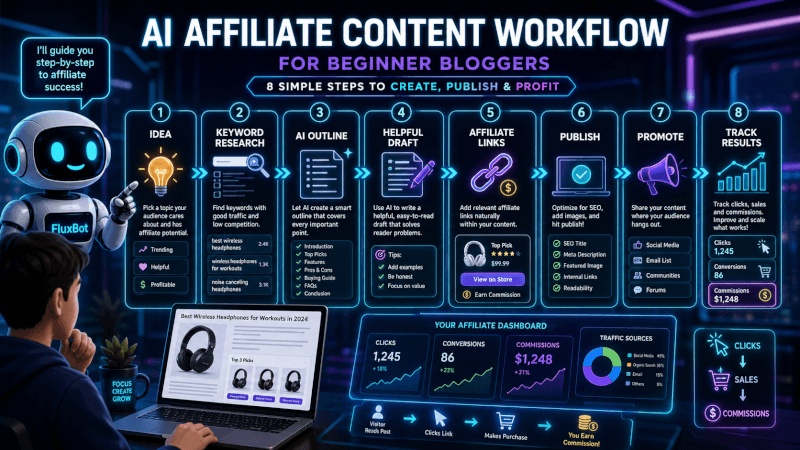
An AI affiliate content workflow helps beginner bloggers plan, write, improve, and organize affiliate posts without starting from a blank page every time.
The goal is not to let AI replace your judgment. The goal is to use AI as a helper for research notes, outlines, comparison angles, buyer questions, formatting, and internal links.
Quick Answer
The best AI affiliate content workflow starts with reader intent, then moves through product research, outline planning, disclosure placement, draft creation, trust checks, internal links, and final human review.
A beginner workflow
This guide shows a repeatable process for creating affiliate content with AI while keeping the article useful, clear, and trustworthy.
New bloggers
Built for beginner bloggers, niche site owners, affiliate marketers, and creators who want cleaner content systems.
Trust before clicks
This workflow avoids fake testing claims, fake prices, thin product dumps, and hidden affiliate promotion.
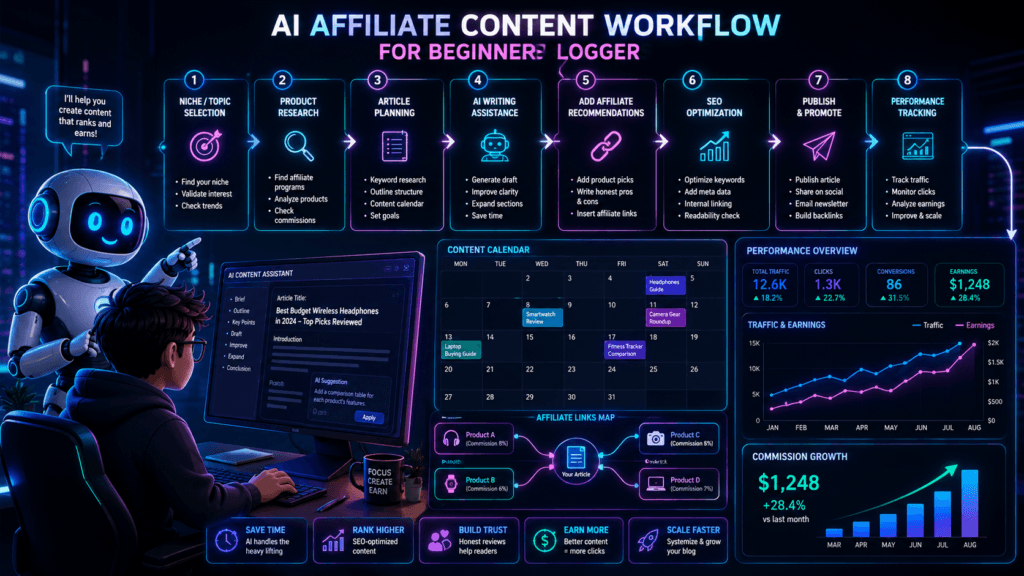
Beginner AI affiliate workflow
- Step 1: Choose the reader problem before choosing products.
- Step 2: Gather product facts from reliable sources.
- Step 3: Use AI to build a helpful outline.
- Step 4: Add disclosure and buyer guidance near the top.
- Step 5: Draft sections with clear use cases and limits.
- Step 6: Add internal links and final human review.
The AI Affiliate Content Workflow
A strong AI affiliate content workflow starts before the first draft. First, decide what problem the reader is trying to solve.
Beginner bloggers often start with products. That creates thin content. Start with the buyer question instead, then match products to the situation.
Weak affiliate post
- Starts with random products
- Uses vague “best” claims
- Hides the affiliate relationship
- Copies product descriptions
- Has no clear reader path
Strong affiliate post
- Starts with reader intent
- Explains who each product fits
- Shows disclosure near the top
- Uses original guidance
- Gives a clear next click
Pick the Reader Problem
Write down the exact problem the reader has. For example, “I need affordable creator gear for a small desk” is clearer than “best gear.”
Choose the Post Type
Decide whether the post is a buyer guide, comparison, review roundup, alternative list, setup guide, or beginner checklist.
Collect Product Facts
Gather specs, use cases, limitations, warranty notes, compatibility details, and retailer information before asking AI to draft anything.
Use AI for the Outline
Ask AI to organize your notes into sections like quick picks, who it is for, what to compare, and what to avoid.
Add Disclosure Early
Put the affiliate disclosure near the top, before product links. Readers should not have to hunt for it.
Draft Helpful Sections
Use AI to draft plain-English explanations, but add your own judgment, warnings, comparisons, and buyer-fit notes.
Check Claims Before Publishing
Remove exact prices, fake testing claims, fake ratings, fake deal language, and unsupported performance claims.
Add Internal Links
Link to related guides, category hubs, beginner explainers, comparison posts, and setup pages that help the reader choose.
AI Prompts for Beginner Affiliate Bloggers
These prompts help you use AI without handing over the whole article. They keep the workflow focused on structure and clarity.
Prompt 1:
Create an affiliate article outline for [reader problem].
Focus on buyer intent, product comparison points, warnings, and useful internal links.

Prompt 2:
Turn these product notes into beginner-friendly comparison sections.
Do not invent testing, prices, ratings, discounts, or availability.

Prompt 3:
Review this affiliate draft for trust problems.
Flag weak claims, missing disclosure, thin sections, and unclear CTAs.

Prompt 4:
Suggest internal links for this article.
Group them by beginner education, buyer guide, comparison, and next step.
Where to Place Affiliate Links
Place affiliate links where they help the reader decide. Do not place links just because there is open space.
Near the top
Use a disclosure first, then add a short “quick picks” section only if it helps the reader compare options.
Inside product cards
Each product card should explain who it fits, why it is useful, and what the reader should check before buying.
After comparisons
Comparison tables can earn clicks because they help readers understand differences before choosing.
At the final decision point
End with a practical recommendation path, not a pushy sales pitch.
AI Affiliate Content Checklist
Use this checklist before publishing any AI-assisted affiliate article. It helps catch weak trust signals and missing reader guidance.
Before publishing, check:

[ ] The article starts with the reader problem.
[ ] The affiliate disclosure appears near the top.
[ ] No exact prices are used unless verified.
[ ] No fake testing or ownership claims appear.
[ ] Product sections explain who each option fits.
[ ] Pros and cons are useful, not generic.
[ ] Internal links guide readers to related posts.
[ ] CTAs explain what the reader should do next.
[ ] AI-written sections were reviewed by a human.
[ ] The article gives practical buying advice.
FAQ: AI Affiliate Content Workflow
Can beginner bloggers use AI for affiliate content?
Yes. Beginner bloggers can use AI for outlines, summaries, comparison angles, FAQ ideas, internal links, and draft cleanup.
Should AI write the whole affiliate article?
AI can help with drafting, but the blogger should review facts, claims, product details, disclosures, and final recommendations.
Where should an affiliate disclosure go?
Put the disclosure near the top of the post before affiliate links. It should be easy to notice and easy to understand.
What should AI not invent in affiliate content?
AI should not invent prices, testing results, product ownership, ratings, discounts, availability, commissions, or personal experience.
What is the best first affiliate post for beginners?
A beginner-friendly buyer guide is often easier than a full review because it can focus on use cases, comparison points, and decision help.
Final Takeaway
An AI affiliate content workflow works best when it starts with the reader, not the product.
Use AI to organize research, build outlines, improve structure, and find missing sections. Then use human review to protect trust.

About the Author
Jon Hicks
Founder of TechnofluxAI.
I’m the creator behind TechnofluxAI, focused on breaking down powerful AI tools, emerging trends, and practical strategies to help creators and entrepreneurs stay ahead in a rapidly evolving digital world.
Follow TechnofluxAI for the latest AI tools & strategies