

Creator Economy Alert
YouTube Monetization Rules Just Got Harder for Creators
YouTube is raising the bar for creators who want to unlock full ad and Premium revenue sharing. For small channels, Shorts creators, and AI-assisted content brands, this changes the path to getting paid.
Quick Answer
YouTube monetization rules are becoming harder for new creators. Starting February 1, 2027, new creators applying for the main YouTube Partner Program revenue-sharing tier will need 1,000 subscribers plus either 8,000 qualified public watch hours in the last 365 days or 20 million qualified Shorts views in the last 90 days.
Why Creators Are Worried
The old path already felt slow for beginners. Doubling the watch-hour and Shorts-view targets means creators may need better retention, stronger content systems, and more consistent uploads before YouTube opens the bigger revenue doors.
What This Means
Creators can still win, but the easy shortcut mindset is getting weaker. Random uploads, copied clips, and low-effort AI content are becoming riskier if the goal is long-term monetization.
Creator takeaway: Do not wait until you are close to monetization to get serious. Build a channel that earns watch time, trust, and repeat viewers now.
Main Breakdown
What the New YouTube Monetization Rules Mean
The main message is simple: YouTube wants stronger proof that a channel can hold attention before it unlocks full monetization. That does not mean new creators should quit. It means creators need a better plan.
The Requirement Jump
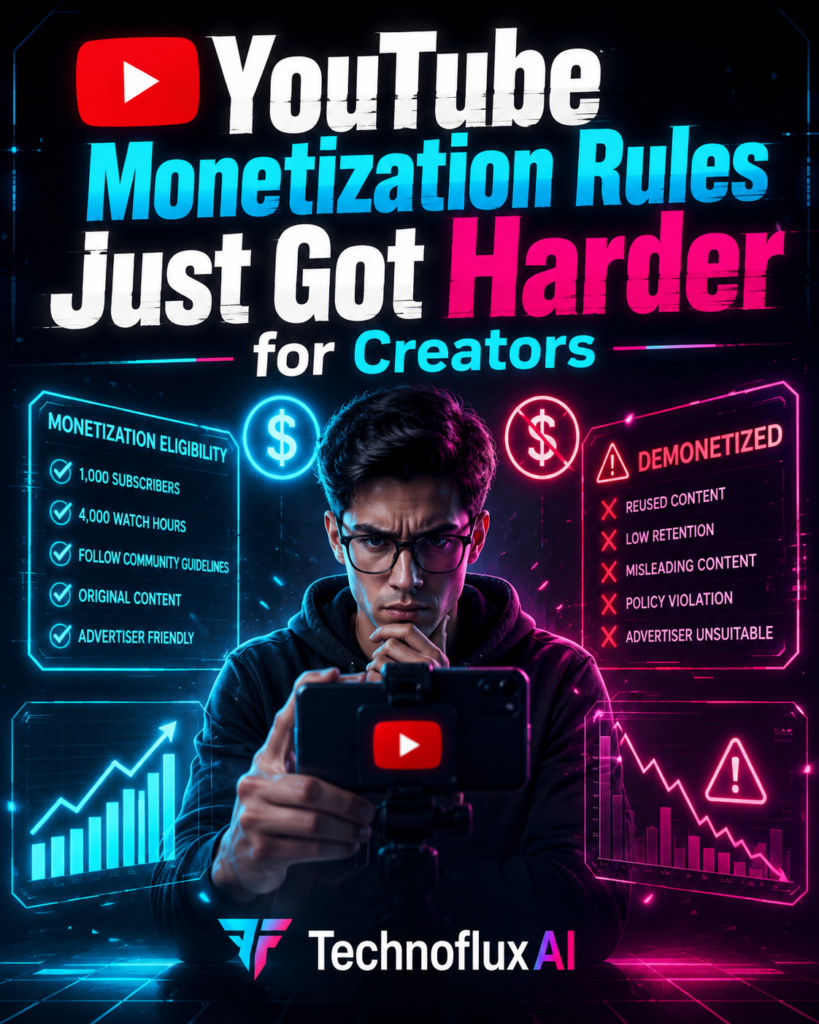
The current full YouTube Partner Program path requires 1,000 subscribers plus either 4,000 valid public watch hours in the last 12 months or 10 million valid public Shorts views in the last 90 days. The reported 2027 change raises that to 8,000 qualified watch hours or 20 million qualified Shorts views for new creators applying to the main revenue-sharing tier.
Current Path
1,000 subscribers plus 4,000 public watch hours, or 10 million valid public Shorts views.
New 2027 Path
1,000 subscribers plus 8,000 qualified watch hours, or 20 million qualified Shorts views.
Why Shorts Creators Feel the Pressure
Shorts can grow fast, but Shorts views can also be unpredictable. A single viral video may bring attention for a few days, then disappear. The higher threshold pushes creators toward repeatable audience demand instead of one lucky breakout.
Practical Example
A creator posting AI productivity Shorts might get one video to spike, but that does not automatically create a monetizable channel. To survive stricter YouTube monetization rules, the creator needs repeatable series, stronger hooks, better retention, and a clear reason for viewers to subscribe.
Low-Effort Content Is Under More Pressure
YouTube has also clarified that repetitive, mass-produced, or inauthentic content does not qualify for monetization. This matters for channels using copied clips, templated AI videos, generic voiceovers, or bulk-uploaded content with little original value.
Risky Content
Copied clips, repeated templates, thin reaction videos, generic AI voiceovers, slideshow spam, and videos with no clear original angle.
Stronger Content
Original commentary, personal experience, useful teaching, unique editing, strong examples, and creator-led analysis.
A Better Creator Workflow
- Pick one channel promise: Make it clear what viewers get when they subscribe.
- Create repeatable series: Build formats you can publish every week without starting from zero.
- Use Shorts for discovery: Let Shorts test hooks and topics, then turn winners into long-form videos.
- Track retention: Views matter, but watch time and viewer satisfaction matter more for a monetization plan.
- Add original value: Use your voice, examples, opinion, experience, and structure.
Creator Checklist
Before publishing, ask one question: does this video give viewers something they could not get from a copied clip, a lazy template, or a generic AI script? If not, improve it before uploading.
Creator Strategy
How to Protect Your Channel Before the Rules Hit
The creators who adapt early will have an advantage. The goal is not just to reach monetization. The goal is to build a channel YouTube understands, viewers trust, and advertisers can support.
Advanced Tips for Small Creators
Turn Shorts Into a Funnel
Use Shorts to test hooks, topics, and audience demand. Then turn the strongest ideas into longer videos that can build real watch time.
Make Playlists Strategic
Group videos by viewer problem, skill level, or outcome. Strong playlists can help viewers watch more than one video in a session.
Create a Signature Format
A repeatable format makes your channel easier to recognize. Try weekly tutorials, tool breakdowns, creator audits, or news explainers.
Common Mistakes to Avoid
- Chasing viral Shorts without building long-form watch time.
- Using AI tools to mass-produce generic videos with no original insight.
- Copying trending formats without adding personality, commentary, or useful examples.
- Ignoring retention because the thumbnail got clicks.
- Waiting until monetization to think about affiliate offers, products, newsletters, or community building.
FAQ: YouTube Monetization Rules
Is YouTube banning AI content?
No. The issue is not simply AI. The issue is low-effort, repetitive, mass-produced, or inauthentic content that does not add meaningful value.
Will current YouTube Partner Program creators lose monetization?
The reported threshold increase applies to new creators applying for the main revenue-sharing tier. Current creators should still follow YouTube monetization policies and avoid inauthentic content.
Are Shorts still worth making?
Yes, but Shorts should not be the whole plan. Use Shorts for discovery, then build long-form videos, playlists, and subscriber trust.
What should new creators do now?
Start building watch time early. Publish original content consistently, create repeatable formats, and avoid content that looks automated, copied, or spammy.
Final Takeaway
The new YouTube monetization rules make the path harder, but they also make the message clearer: YouTube wants creators who can hold attention, build trust, and publish original value. Small creators should stop treating monetization like a lucky finish line and start treating it like a system.
CTA: Build a 90-day content plan now. Focus on one audience, one clear promise, and one repeatable video format that can earn real watch time before the new requirements arrive.