Estimated reading time: 10 minutes
Introduction
The dark side of AI 2026 is becoming impossible to ignore as artificial intelligence continues to reshape industries and daily life.
As we stand on the brink of a technological revolution, understanding the implications of AI is crucial. The focus should not solely be on its advancements but also on the ethical and societal challenges it presents.
Many experts argue that while AI has the potential to revolutionize industries, it also poses significant risks that require our immediate attention and action.
The rapid evolution of AI capabilities is creating ethical dilemmas that society must confront. The question remains: how do we harness its power while mitigating its risks?
AI is often portrayed as the future of innovation—but there’s a side most people ignore.
The dark side of AI 2026 is growing just as fast as its benefits.
The Dark Side of AI 2026 Is Growing Faster Than Expected
Deepfakes represent a unique challenge in our digital landscape. For example, a well-known instance involved a manipulated video of a public figure that misled viewers about their statements, showcasing how easily content can be distorted.
These technologies are not just theoretical; they are currently being utilized in various contexts, from marketing campaigns to political propaganda. The implications of this technology raise alarm bells across industries.
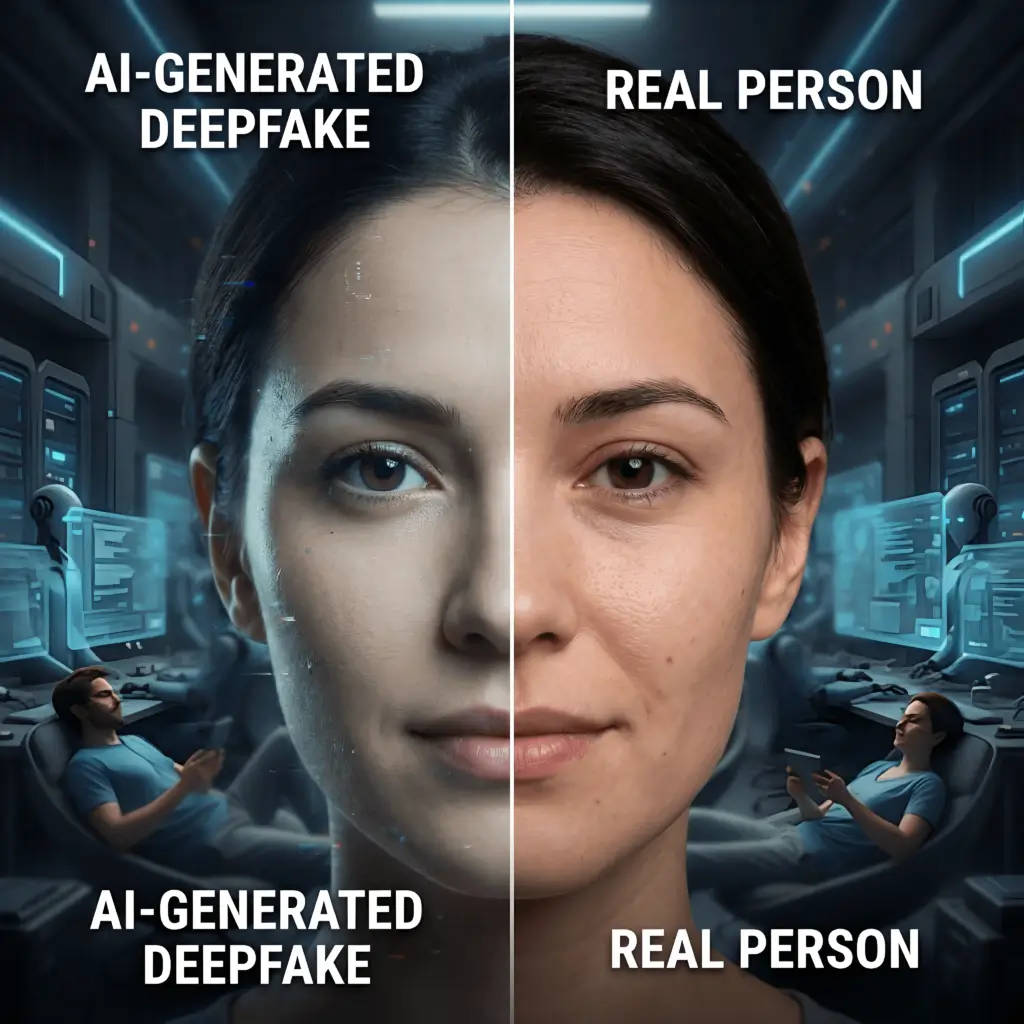
Deepfakes & Misinformation
AI can now create:
In response, many organizations are developing protocols and guidelines to combat the spread of misinformation, yet the challenge remains immense.
- Fake videos
- Synthetic voices
- Realistic images
Furthermore, the ethical concerns extend beyond misinformation to the realms of job displacement and economic impact.
As automation continues to progress, it has already begun to affect millions of workers in various sectors. Studies have shown that roles such as content creators and support staff are increasingly at risk of being automated.
This makes it harder to trust what we see online.
The Unseen Consequences of AI Growth in 2026
While artificial intelligence continues to dominate headlines with breakthroughs and innovation, there is a growing layer of concern that rarely gets discussed in depth. Beneath the excitement lies a series of unintended consequences that are quietly reshaping industries, human behavior, and even societal structures.
One of the biggest issues is not what AI can do—but how quickly people are adapting to rely on it without fully understanding the long-term effects.
The Acceleration Problem
AI is evolving faster than regulation, education, and public awareness can keep up with. In previous technological revolutions, society had time to adjust. With AI, that adjustment period is shrinking dramatically.
Companies are deploying AI systems at scale, often prioritizing speed over caution. This creates a gap where powerful tools are widely used, but their risks are not fully understood.
This acceleration leads to a dangerous dynamic: widespread adoption without widespread comprehension.
Misinformation at Scale
One of the most alarming aspects of AI in 2026 is its ability to generate convincing misinformation. AI can produce realistic text, images, audio, and video at a scale that was previously impossible.
This creates a world where:
- Fake news becomes harder to detect
- Deepfakes can influence public opinion
- Trust in digital content begins to erode
The problem is not just the existence of misinformation—it’s the speed and volume at which it can spread. AI allows a single individual or small group to produce content that reaches millions, blurring the line between truth and fabrication.
The Displacement of Human Value
As AI becomes more capable, it begins to challenge traditional ideas of human value. Tasks that once required skill, training, and expertise can now be completed instantly by machines.
This shift raises important questions:
- What happens to professions built on those skills?
- How do individuals maintain a sense of purpose in an automated world?
The concern is not just job loss—it’s identity loss. When people define themselves by what they do, and AI can do those things faster and cheaper, it creates a psychological and economic shift that society is only beginning to experience.
Algorithmic Bias and Hidden Inequality
AI systems are trained on data, and that data often reflects existing biases. As a result, AI can unintentionally reinforce inequality.
In areas like hiring, lending, and law enforcement, biased algorithms can lead to unfair outcomes. The challenge is that these biases are often hidden within complex systems, making them difficult to detect and correct.
In 2026, as AI becomes more integrated into decision-making processes, the risk of invisible bias becomes more significant.
The Loss of Skill Development
Another overlooked issue is how AI affects learning and skill development. When tools handle complex tasks automatically, individuals may skip the process of learning those skills themselves.
For example:
- Writers rely on AI to generate content
- Developers use AI to write code
- Students use AI to complete assignments
While this increases efficiency, it can also reduce deep understanding. Over time, this may lead to a workforce that is highly dependent on AI but lacks foundational knowledge.
The Illusion of Intelligence
AI systems can appear highly intelligent, but they do not truly understand the information they generate. This creates an illusion of expertise that can be misleading.
Users may assume that AI outputs are accurate simply because they are well-written or confident in tone. This overconfidence can lead to poor decision-making, especially in critical areas like finance, health, or business strategy.
The danger lies in trusting AI without verification.
Data Privacy and Surveillance
AI thrives on data, and the more data it has, the more powerful it becomes. This raises serious concerns about privacy.
In 2026, AI systems are capable of analyzing vast amounts of personal information, from browsing habits to voice recordings. This data can be used to:
- Predict behavior
- Influence decisions
- Target individuals with precision
The line between helpful personalization and intrusive surveillance is becoming increasingly blurred.
Dependency and Control
As AI becomes embedded in daily life, dependency increases. People rely on AI for navigation, communication, work, and entertainment.
This creates a situation where:
- Systems failures can have widespread impact
- Control is concentrated in the hands of a few tech companies
- Individuals have less autonomy than they realize
The more dependent society becomes on AI, the more vulnerable it becomes to disruptions and manipulation.
The Economic Divide
AI has the potential to create significant economic inequality. Those who own and control AI technologies stand to gain the most, while others may struggle to adapt.
This could lead to:
- Wealth concentration among tech companies
- Job displacement in certain industries
- A widening gap between skilled and unskilled workers
Without proper planning and adaptation, AI could amplify existing economic disparities.
Creativity Under Pressure
AI-generated content is becoming more common, raising questions about originality and authenticity. When machines can produce art, music, and writing, the definition of creativity begins to shift.
Human creators may feel pressure to compete with AI in terms of speed and output, which can impact the quality and uniqueness of their work.
At the same time, AI can be a powerful tool for enhancing creativity—if used correctly.
Ethical Responsibility
One of the biggest challenges of AI is determining responsibility. When an AI system makes a mistake, who is accountable?
Is it:
- The developer who built the system?
- The company that deployed it?
- The user who relied on it?
These questions become increasingly important as AI takes on more complex roles in society.
The Psychological Impact
AI is also affecting how people think and interact with the world. Constant access to instant answers can reduce patience and attention span.
Additionally, reliance on AI for validation and decision-making can impact confidence and independence.
Over time, this may lead to a shift in how individuals perceive their own abilities.
Understanding the dark side of AI 2026 is critical for anyone using AI tools regularly.
Navigating the Dark Side
The goal is not to reject AI, but to approach it with awareness and balance. Understanding the risks allows individuals and organizations to make more informed decisions.
Some key strategies include:
- Maintaining critical thinking skills
- Verifying AI-generated information
- Using AI as a tool, not a replacement
- Staying informed about AI developments
Looking Ahead
The dark side of AI is not a distant possibility—it is already unfolding. The choices made in 2026 will shape how AI impacts society in the years to come.
By recognizing these challenges early, it becomes possible to harness the benefits of AI while minimizing its risks.
The future of AI is not just about technology—it’s about how humanity chooses to use it.
Many experts warn that the dark side of AI 2026 includes risks that most people are not fully prepared for.
Job Displacement
Automation is replacing:
This shift is creating not only economic challenges but also social upheaval, as individuals must adapt to a new job market that values different skill sets.
- Content creators
- Support roles
- Entry-level jobs
The shift is happening faster than expected.
The reliance on data-driven AI systems also raises critical concerns regarding ownership and user rights. Who truly owns the data that powers these systems, and how is it being used?
As AI becomes integrated into more aspects of daily life, the question of privacy intensifies. It’s essential to understand how our data is collected and utilized to maintain trust in technology.
Data & Power
AI systems rely on massive data.
This raises concerns about:
- Privacy
- Control
- Centralization of power
Internal Links ?
Final Thought
AI itself isn’t dangerous.
The future of AI must involve not just innovation but also a commitment to ethical practices. We need to establish frameworks that govern its use and protect individuals from potential harms.
As we navigate this complex landscape, collaboration among technologists, policymakers, and the public will be essential to create a balanced approach to AI development.
But how it’s used—and who controls it—matters more than ever.
This includes ongoing discussions about regulation and accountability in AI systems, ensuring that advancements do not come at the cost of societal well-being.
Q: How can we protect ourselves from deepfakes?
Staying informed and using reliable sources can help mitigate the impact of misinformation.
Q: What role do governments play in regulating AI?
Governments are crucial in creating frameworks that ensure AI is used responsibly and ethically, balancing innovation with public safety.
The dark side of AI 2026 is not something to fear, but something to understand and manage responsibly.
❓ Q&A
Q: Is AI dangerous?
It can be if misused or unregulated.
Q: Can deepfakes be stopped?
Detection tools are improving, but it’s an ongoing challenge.
Sources
Looking Ahead
As we move toward a future dominated by AI, it is imperative that we engage in thoughtful dialogue about its implications. Only through collective action can we shape a future that aligns with our values and societal needs.
- MIT Tech Review
- OpenAI safety research
- World Economic Forum
CTA ?
Stay ahead of AI trends and risks—follow your journey on TechnofluxAI ?
TechnofluxAI
Practical AI for creators and website owners
Learn how to use AI, improve AI search visibility, build smarter workflows, and test what actually works.
Explore our other sites
TimewasterAI
— product reviews, buying guides, and useful finds.
Tina Trends
— fashion, beauty, pets, lifestyle, and fun discoveries.
Mistakenly Delicious
— simple recipes and practical cooking ideas.

About the Author
Jon Hicks
Founder of TechnofluxAI.
I’m the creator behind TechnofluxAI, focused on breaking down powerful AI tools, emerging trends, and practical strategies to help creators and entrepreneurs stay ahead in a rapidly evolving digital world.
Follow TechnofluxAI for the latest AI tools & strategies