
Introduction
AI is everywhere—from writing emails to making decisions.
But are we becoming too dependent on it already?
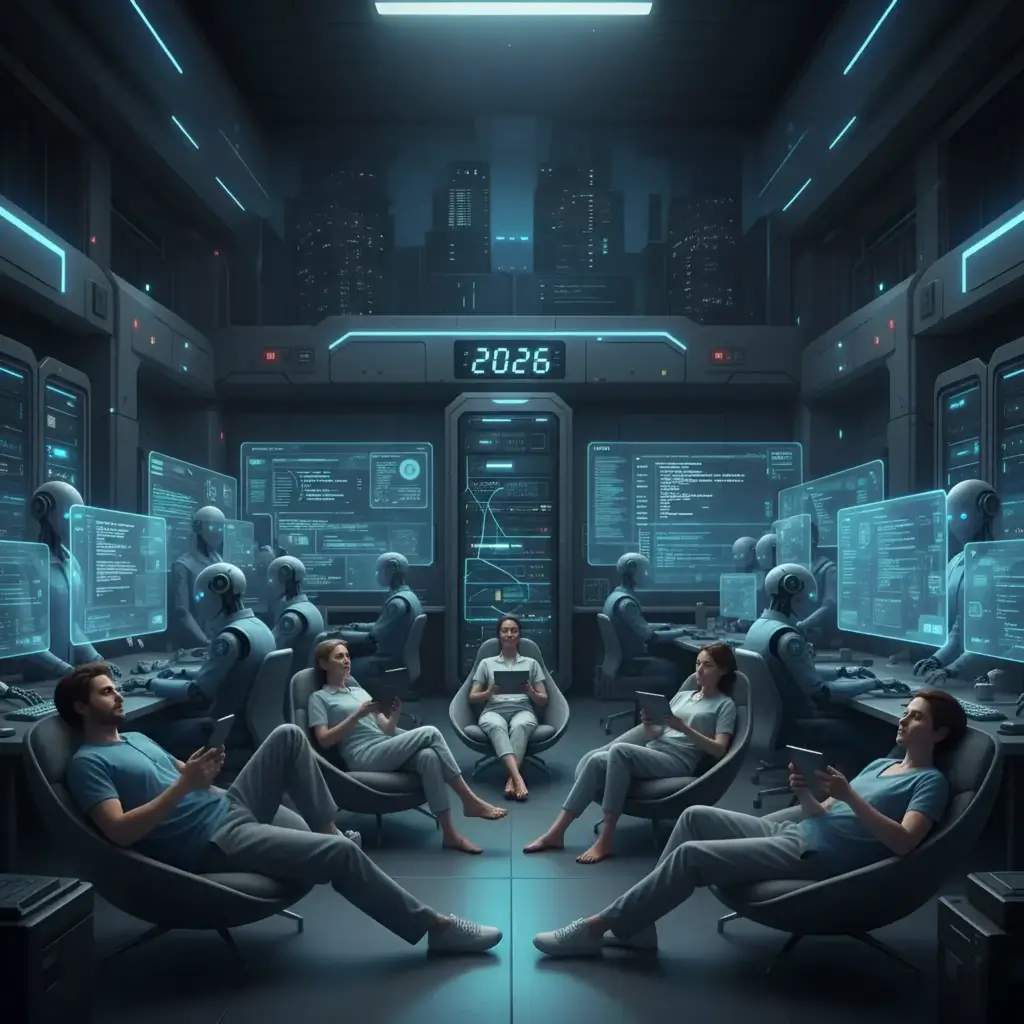
As we look ahead, we must consider the implications of this trend, especially with the looming concern of AI dependency 2026.
Key Takeaways
- AI dependency is changing human behavior, impacting problem-solving and decision-making negatively.
- People may lose independent thinking, relying on AI for conclusions rather than evaluating information critically.
- AI influences creativity, but it can lead to diminished originality as users become passive creators.
- While AI enhances productivity, it can also create unrealistic expectations and pressure to automate tasks.
- Ultimately, awareness of AI dependency is crucial; using AI as a tool, not a replacement for human capabilities, is key.
Estimated reading time: 6 minutes
The Hidden Ways AI Dependency Is Already Changing Human Behavior
Artificial intelligence is no longer a futuristic concept—it’s embedded in everyday life. From writing emails to navigating cities, AI has quietly become a core part of how people function. While these tools bring undeniable convenience, they also introduce subtle behavioral shifts that many people don’t immediately notice.
One of the most significant changes is how people approach problem-solving. In the past, individuals relied on memory, logic, and experience to work through challenges. Today, many instinctively turn to AI for instant answers. This shift is not inherently negative, but it raises an important question: are we strengthening our abilities, or slowly outsourcing them?
The Decline of Independent Thinking
A growing concern around AI dependency in 2026 is the decline of independent thinking. When answers are always one prompt away, the incentive to deeply analyze or critically evaluate information decreases.
For example, instead of researching multiple sources, comparing viewpoints, and forming a unique conclusion, users may accept AI-generated responses at face value. Over time, this can lead to a passive consumption mindset rather than active intellectual engagement.
This doesn’t mean AI is making people less intelligent—it means it’s changing how intelligence is applied. The risk lies in becoming overly reliant on AI as the first and only source of truth.
Decision-Making Is Becoming Automated
Another major shift is in decision-making. AI tools now assist with everything from financial planning to career choices. Algorithms suggest what to buy, what to watch, who to date, and even how to respond in conversations.
While this level of personalization can be helpful, it also reduces the need for individuals to weigh options themselves. When decisions are consistently guided by AI, people may lose confidence in their own judgment.
In 2026, this trend is accelerating. Businesses and individuals alike are increasingly trusting AI-driven recommendations, sometimes without fully understanding how those recommendations are generated.
Creativity: Enhanced or Replaced?
AI has revolutionized creativity, but it has also sparked debate about originality. Tools can now generate blog posts, artwork, music, and even entire business ideas in seconds.
For creators, this can be empowering. It removes barriers and speeds up production. However, it also introduces a new challenge: distinguishing between human creativity and AI-assisted output.
When people rely heavily on AI for creative tasks, they may begin to lose their unique voice. Instead of creating from scratch, they become editors of machine-generated content.
This doesn’t eliminate creativity—it transforms it. The most successful individuals in 2026 are those who use AI as a tool, not a replacement.
The Illusion of Productivity
AI tools often create the feeling of increased productivity. Tasks that once took hours can now be completed in minutes. On the surface, this seems like a clear win.
However, there’s a hidden downside. When everything becomes faster, expectations increase. People are expected to produce more, respond quicker, and manage larger workloads.
This creates a cycle where AI doesn’t just save time—it raises the baseline of what is considered “normal” productivity. As a result, individuals may feel pressure to constantly rely on AI just to keep up.
Memory and Knowledge Retention
Another subtle effect of AI dependency is its impact on memory. When information is always accessible, the need to remember details decreases.
Think about how often people now rely on AI or search engines instead of recalling information themselves. Over time, this can weaken memory retention and reduce the depth of understanding.
This doesn’t mean knowledge is disappearing—it means it’s becoming externalized. Instead of storing information internally, people store it in systems they can access instantly.
Social Interaction Is Changing
AI is also influencing how people communicate. From AI-generated messages to automated responses, interactions are becoming more efficient but less personal.
In some cases, individuals rely on AI to craft emails, texts, or even social media posts. While this can improve clarity and professionalism, it can also reduce authenticity.
As AI becomes more integrated into communication, the line between human and machine-generated interaction becomes increasingly blurred.
The Risk of Overtrust
One of the biggest warning signs of AI dependency is overtrust. Many users assume that AI outputs are always accurate, unbiased, and reliable.
In reality, AI systems are only as good as the data they are trained on. They can produce errors, reflect biases, and generate misleading information.
When people rely on AI without questioning its outputs, they risk making decisions based on incomplete or incorrect data.
Balancing Convenience and Control
The key issue is not whether AI is good or bad—it’s how it is used. Dependency becomes a problem when convenience replaces critical thinking, and automation replaces understanding.
The goal in 2026 should not be to avoid AI, but to use it strategically. This means:
- Verifying AI-generated information
- Using AI as a starting point, not the final answer
- Maintaining independent thinking skills
- Continuing to learn and develop without relying solely on automation
A Shift in Human Identity
Perhaps the most profound impact of AI dependency is how it reshapes human identity. As machines take over more cognitive tasks, people are forced to redefine their value.
What does it mean to be skilled in a world where AI can perform complex tasks instantly? The answer lies in adaptability, creativity, and emotional intelligence—areas where humans still have a significant advantage.
The Path Forward
AI is not going away. In fact, its influence will only continue to grow. The challenge is ensuring that this growth enhances human capability rather than diminishing it.
The warning signs of AI dependency in 2026 are not about fear—they are about awareness. By recognizing these shifts early, individuals can make conscious choices about how they interact with technology.
The future belongs to those who can strike the right balance: leveraging AI for efficiency while preserving the uniquely human traits that machines cannot replicate.
Signs of AI Dependency
- Relying on AI for simple tasks
- Reduced problem-solving ability
- Less original thinking
The Convenience Trap
AI makes life easier—but that ease can lead to:
- Laziness
- Reduced skill development
- Over-automation
Finding the Balance
Use AI to:
- Enhance thinking
- Speed up workflows
- Generate ideas
Not replace your brain.
Internal Links ?
- Link to: The Dark Side of AI
- Link to: Is AI Killing Creativity?
Final Thought
AI dependency isn’t the danger.
Blind dependency is.
❓ Q&A
Q: Is AI dependency bad?
Only if it replaces critical thinking.
Q: How do I use AI correctly?
As a tool—not a crutch.
Sources
- Pew Research AI studies
- MIT Technology Review
- World Economic Forum
Build smarter, not lazier—use AI the right way on TechnofluxAI ?

About the Author
Jon Hicks
Founder of TechnofluxAI.
I’m the creator behind TechnofluxAI, focused on breaking down powerful AI tools, emerging trends, and practical strategies to help creators and entrepreneurs stay ahead in a rapidly evolving digital world.
Follow TechnofluxAI for the latest AI tools & strategies