Estimated reading time: 8 minutes
Key Takeaways
- Modern AI search optimization increasingly focuses on SEO, conversational content, and topical authority.
- Generative Engine Optimization (GEO) tools like CustomGPT, Surfer SEO, and Frase help improve AI visibility and content organization.
- The best GEO tools enhance relevance, AI readability, and workflow efficiency for creators and businesses.
- Traditional SEO tools still play a role, but integrating GEO strategies will likely improve long-term AI visibility.
- As AI-powered search evolves, combining strong SEO practices with effective GEO tools will offer significant advantages.
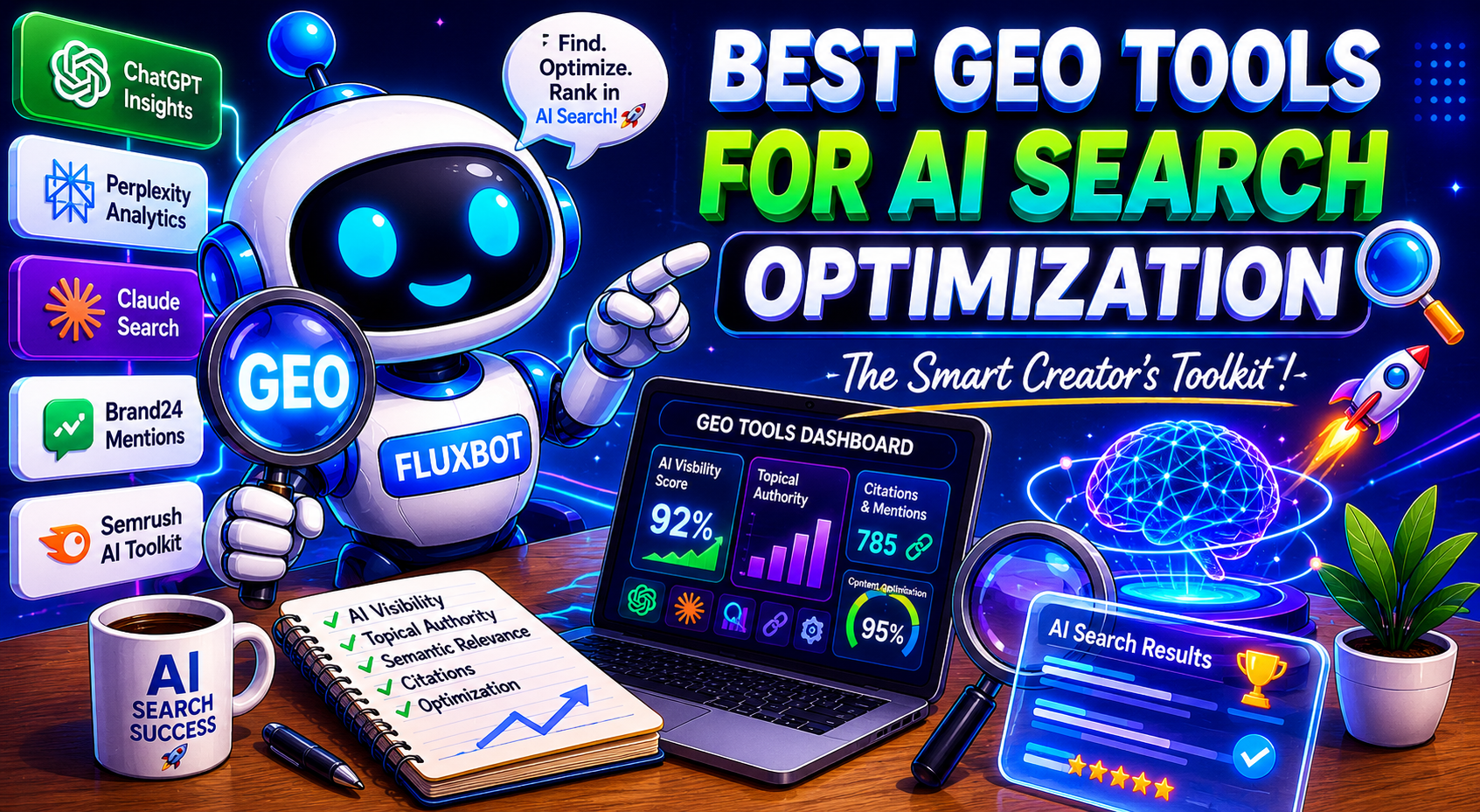
As AI-powered search systems continue changing how people discover information online, businesses and creators are searching for better ways to improve AI visibility.
Traditional SEO tools still matter, but modern AI search optimization increasingly requires tools focused on:
- semantic SEO
- conversational content
- topical authority
- AI workflows
- structured content
- AI visibility
- content organization
This is where GEO tools become important.
Generative Engine Optimization (GEO) tools help creators and businesses optimize content for AI-powered systems like:
- ChatGPT
- Google AI Overviews
- Gemini
- Claude
- Perplexity
The best GEO tools help improve:
- AI readability
- content structure
- relevance
- workflow automation
- topical authority
- conversational search optimization
Here are some of the best GEO tools available in 2026.
How ChatGPT Chooses Sources for AI Answers
? AI Search & GEO Update
AI search engines are rapidly changing how websites are discovered in 2026. Platforms like ChatGPT, Google AI Overviews, Claude, Perplexity, and Gemini now prioritize structured answers, topical authority, trusted sources, semantic relevance, and conversational content experiences.
Modern SEO is evolving into GEO (Generative Engine Optimization), where websites are optimized not only for rankings, but also for AI citations, summaries, recommendations, and conversational retrieval systems.
- AI search systems favor structured topical clusters
- Internal linking helps AI understand relationships between pages
- Fresh content updates improve visibility signals
- Helpful summaries and FAQs improve AI retrieval
- Conversational content performs better for AI search engines
1. CustomGPT
Best For:
AI agents, conversational search, AI knowledge systems, and business automation.
CustomGPT helps businesses create AI-powered assistants trained on their own content and data.
This makes it useful for:
- customer support
- internal knowledge bases
- AI search workflows
- conversational business systems
Why It Works for GEO
CustomGPT aligns naturally with the future of AI-powered information retrieval because it focuses heavily on:
- structured information
- conversational retrieval
- knowledge organization
- semantic understanding
Businesses can use it to create:
- AI support systems
- conversational workflows
- AI-powered knowledge tools
GEO Strengths
- Conversational AI integration
- Knowledge retrieval
- Structured content usage
- AI workflow support
Potential Weaknesses
- Advanced features may require setup time
- Better suited for businesses than casual creators
2. Surfer SEO
Best For:
Semantic SEO and content optimization.
Surfer SEO remains one of the strongest tools for improving semantic relevance and topical coverage.
It helps creators:
- organize content
- improve keyword relationships
- strengthen semantic depth
- optimize structure
Why It Works for GEO
Modern AI systems increasingly rely on semantic relationships rather than simple keyword repetition.
Surfer helps improve:
- topical depth
- entity relevance
- semantic optimization
- structured content quality
GEO Strengths
- Semantic SEO analysis
- Content structure optimization
- NLP keyword suggestions
- Topic coverage
Potential Weaknesses
- Can encourage over-optimization if used poorly
- Requires human editing for natural conversational tone
3. Frase
Best For:
Answer-focused content and FAQ optimization.
Frase is especially useful for GEO because it focuses heavily on:
- questions
- answer structure
- semantic organization
- conversational formatting
Why It Works for GEO
AI systems frequently retrieve:
- FAQs
- direct answers
- concise summaries
Frase helps structure content in ways that align naturally with conversational AI systems.
GEO Strengths
- FAQ optimization
- Conversational structure
- AI-friendly content planning
- SERP question research
Potential Weaknesses
- Smaller workflow ecosystem than some competitors
- Requires editorial oversight
4. Jasper
Best For:
AI-assisted content workflows and scaling content production.
Jasper helps creators and businesses speed up:
- blog writing
- content planning
- workflow generation
- marketing copy creation
Why It Works for GEO
AI search optimization increasingly rewards:
- topical consistency
- publishing frequency
- content depth
- workflow efficiency
Jasper can help accelerate content creation while maintaining topical organization.
GEO Strengths
- AI writing workflows
- Content scaling
- Brand voice tools
- Marketing integration
Potential Weaknesses
- Requires editing for originality
- Human expertise still essential
5. Semrush
Best For:
Overall SEO and topical authority research.
Semrush remains one of the strongest platforms for:
- keyword research
- competitor analysis
- topic discovery
- content gaps
- authority analysis
Why It Works for GEO
Even as AI search grows, traditional SEO data still matters.
Semrush helps identify:
- emerging AI search topics
- content opportunities
- topical clusters
- semantic keyword relationships
GEO Strengths
- Massive SEO dataset
- Keyword gap analysis
- Topic research
- Competitive intelligence
Potential Weaknesses
- Expensive for beginners
- Large feature set may feel overwhelming
6. Ahrefs
Best For:
Backlink analysis and authority research.
Ahrefs remains one of the best tools for:
- backlinks
- content analysis
- authority research
- organic visibility
Why It Works for GEO
Authority still matters in AI search.
Strong backlinks and trusted brand signals may continue helping AI systems identify reliable sources.
GEO Strengths
- Link analysis
- Authority tracking
- Content explorer
- Competitive analysis
Potential Weaknesses
- Limited AI workflow features
- More traditional SEO-focused
7. Writesonic
Best For:
AI content generation and workflow automation.
Writesonic helps streamline:
- blog creation
- content drafting
- AI-assisted workflows
- content scaling
Why It Works for GEO
Publishing consistent, organized topical content helps strengthen AI visibility over time.
Writesonic can accelerate:
- cluster building
- workflow generation
- topic expansion
GEO Strengths
- Fast content creation
- AI workflow support
- Content drafting
- Marketing automation
Potential Weaknesses
- Requires careful editing
- Generic AI output can reduce originality
8. Perplexity Workflows
Best For:
AI-assisted research and conversational discovery.
Perplexity is becoming increasingly useful for:
- AI research
- conversational search
- information discovery
- citation analysis
Why It Works for GEO
Perplexity reflects how conversational AI search is evolving.
Studying how Perplexity:
- retrieves sources
- summarizes content
- structures answers
can help creators better understand AI visibility.
GEO Strengths
- Conversational search research
- AI citation analysis
- Research acceleration
- Information synthesis
Potential Weaknesses
- Not a traditional SEO platform
- Workflow integrations still evolving
What Makes a Good GEO Tool?
The best GEO tools usually help improve:
- semantic relevance
- topical authority
- conversational formatting
- structured content
- AI workflows
- information organization
- content consistency
As AI search evolves, tools focused purely on keyword stuffing may become less effective.
Modern AI search increasingly favors:
- usefulness
- clarity
- semantic depth
- topical relationships
GEO Tools vs Traditional SEO Tools
Traditional SEO tools focused heavily on:
- rankings
- backlinks
- keywords
- metadata
Modern GEO tools increasingly focus on:
- conversational search
- semantic understanding
- topical depth
- AI retrieval
- content workflows
- AI readability
The future likely involves combining both approaches together.
Personal Insight
It makes sense to me that GEO tools are becoming more important because I have already experienced the shift personally while building AI workflows and content systems. During some projects, conversational AI systems became far more useful than traditional search engines for organizing ideas, solving technical problems, researching workflows, and accelerating production.
That shift changes how creators and businesses should think about visibility.
The challenge now is no longer simply ranking webpages. The challenge is creating content systems that AI platforms can understand, summarize, and reference conversationally.
The tools that help organize information clearly and improve semantic understanding may become increasingly valuable over time.
Additionally, creators are adapting their content because AI search systems now evaluate clarity, structure, topical authority, and usefulness differently than traditional search engines. For example, content that includes FAQs, step-by-step explanations, conversational headings, and direct answers is often easier for AI systems to understand and summarize. As a result, businesses are focusing more on helpful content, semantic relevance, and internal linking. Meanwhile, creators who organize content into topic clusters and GEO-focused workflows are improving both search visibility and AI citation potential over time.
Frequently Asked Questions
What are GEO tools?
GEO tools help optimize content for AI-powered search systems and conversational answer engines.
What is the best GEO tool?
The best GEO tool depends on your goals.
Examples:
- CustomGPT → AI agents
- Surfer → semantic SEO
- Frase → FAQ optimization
- Semrush → research
- Jasper → content workflows
Are SEO tools still important?
Yes. Traditional SEO tools still matter alongside AI search optimization tools.
Why are AI workflows important for GEO?
AI workflows help creators organize, structure, and scale content systems more effectively.
What does GEO stand for?
GEO stands for Generative Engine Optimization.
It refers to optimizing content for AI-powered search and conversational retrieval systems.
Final Thoughts
AI-powered search is changing how websites gain visibility online.
The best GEO tools help creators and businesses adapt by improving:
- semantic structure
- conversational formatting
- AI readability
- topical authority
- workflow efficiency
As AI search continues evolving, the websites that combine:
- strong SEO
- helpful content
- semantic organization
- AI workflows
- conversational optimization
may gain significant long-term advantages in AI visibility and search discovery.
Founder Insight: I’ve been working with computers, software, and creative technology since the early days of personal computing and personally test many of the AI tools featured on TechnofluxAI before recommending them.

About the Author
Jon Hicks
Founder of TechnofluxAI.
I’m the creator behind TechnofluxAI, focused on breaking down powerful AI tools, emerging trends, and practical strategies to help creators and entrepreneurs stay ahead in a rapidly evolving digital world.
Follow TechnofluxAI for the latest AI tools & strategies