
Estimated reading time: 6 minutes
Key Takeaways
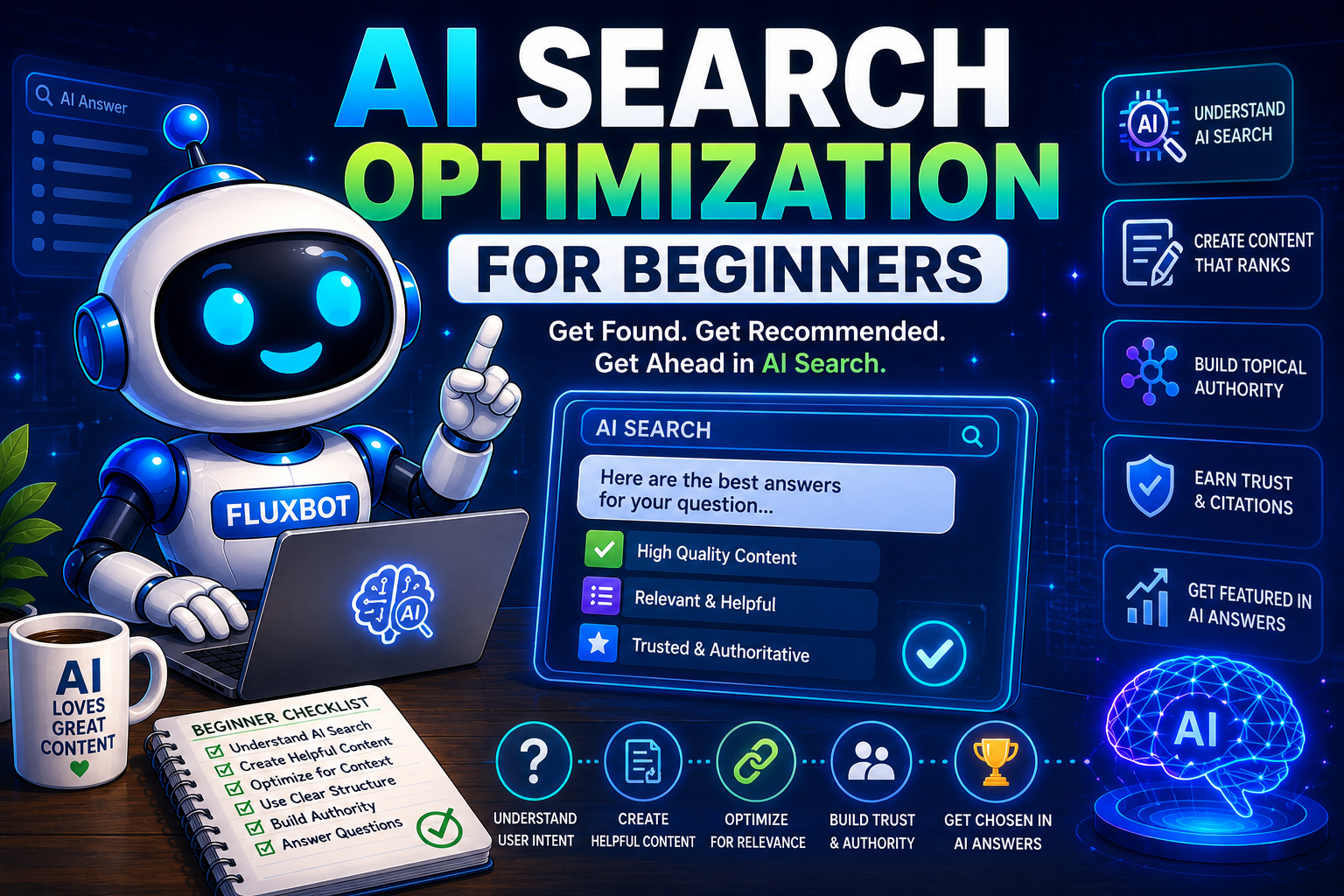
- AI Search Optimization for Beginners focuses on making websites easier for AI systems to understand and recommend.
- The process involves creating clear content structures, answering questions directly, and building topical authority.
- GEO, or Generative Engine Optimization, enhances content for AI search systems and conversational answers.
- Websites should prioritize useful information, clarity, and semantic relationships to succeed in AI search.
- Traditional SEO remains important, but adapting to AI search will be crucial for online visibility.
Search is changing rapidly as AI-powered systems reshape how people discover information online.
Instead of only using traditional search engines, many users now ask conversational AI systems direct questions and receive summarized answers instantly.
Platforms like:
- ChatGPT
- Google AI Overviews
- Gemini
- Claude
- Perplexity
are changing how websites gain visibility online.
This shift has created a growing focus on AI Search Optimization.
For beginners, the idea may sound complicated at first, but the core concept is actually simple:
AI Search Optimization helps websites become easier for AI systems to understand, summarize, and recommend.
What Is AI Search Optimization?
AI Search Optimization is the process of structuring content so AI-powered search systems can:
- understand information clearly
- retrieve useful content
- summarize answers
- identify trusted sources
- recommend webpages conversationally
Traditional SEO focused heavily on:
- rankings
- keywords
- backlinks
- search engine algorithms
AI Search Optimization expands that idea into:
- conversational search
- semantic understanding
- AI retrieval
- topical authority
- answer-focused content
The goal is no longer only:
“Rank higher.”
The goal is increasingly:
“Become useful enough for AI systems to reference.”
What Is GEO?
GEO stands for Generative Engine Optimization.
It refers to optimizing content for:
- AI-powered search systems
- conversational answer engines
- AI-generated summaries
GEO is becoming increasingly important as AI search grows.
Instead of only displaying blue links, AI systems now generate direct answers using information gathered from multiple online sources.
Why AI Search Matters
AI search is changing how users interact with information online.
Instead of opening multiple webpages, users increasingly ask:
- “What is GEO?”
- “What are the best AI tools?”
- “How do I optimize for ChatGPT?”
- “How does AI search work?”
AI systems then summarize information conversationally.
This changes how websites gain traffic and visibility.
How AI Search Is Different From Traditional Search
Traditional search engines usually display:
- lists of webpages
- ranked results
- featured snippets
AI-powered systems increasingly provide:
- direct answers
- summaries
- conversational explanations
- synthesized information
This means websites now need to optimize for:
- AI readability
- semantic clarity
- topical authority
- structured formatting
The Basics of AI Search Optimization
Beginners should focus on a few core concepts first.
1. Use Clear Headings
AI systems rely heavily on structure.
Helpful formatting includes:
- H2 headings
- H3 subheadings
- FAQs
- bullet points
- definitions
Well-organized content is easier for AI systems to summarize and retrieve.
2. Answer Questions Directly
AI systems often retrieve concise answers from webpages.
Instead of writing vague introductions, answer questions clearly and directly.
Example:
Weak:
“Modern digital marketing strategies continue evolving rapidly…”
Better:
“GEO helps optimize content for AI-powered search systems.”
Direct answers improve:
- readability
- AI retrieval
- conversational relevance
3. Build Topical Authority
AI systems increasingly favor websites that demonstrate expertise around an entire topic.
Instead of publishing isolated articles, create connected topic clusters.
Example:
- What Is GEO?
- GEO vs SEO
- AI Search Optimization
- GEO Strategies
- GEO Tools
This helps AI systems understand semantic relationships across your website.
4. Improve Internal Linking
Internal links help AI systems understand topic relationships.
For example:
an article about AI search optimization should naturally connect to:
- GEO strategies
- semantic SEO
- conversational search
- topical authority
- AI visibility
This creates stronger contextual understanding.
5. Use Conversational Language
Modern AI systems understand natural language better than older search algorithms.
Avoid:
- robotic writing
- awkward keyword stuffing
- repetitive phrasing
Instead:
- explain concepts clearly
- write naturally
- answer questions conversationally
This improves:
- readability
- user experience
- AI summarization
6. Focus on Semantic SEO
Semantic SEO involves using related concepts naturally instead of repeating one keyword excessively.
Helpful related terms may include:
- AI search
- conversational search
- AI visibility
- answer engines
- semantic relevance
- AI retrieval
Modern AI systems understand contextual relationships between concepts.
7. Create Useful Content
One of the most important beginner lessons is this:
Helpful content still matters most.
AI systems increasingly prioritize:
- usefulness
- clarity
- expertise
- practical value
- topical depth
Shallow content created only for rankings may struggle as AI search evolves.
How AI Systems Choose Sources
AI systems evaluate many factors when retrieving information.
These may include:
- topical authority
- semantic relevance
- content structure
- clarity
- trust signals
- entity relationships
- consistency
This is why building interconnected topic clusters is becoming increasingly valuable.
Why Topical Authority Matters
One of the biggest changes in AI search is the growing importance of topical authority.
AI systems increasingly prefer websites that cover subjects deeply.
For example, a website containing:
- GEO tutorials
- AI search guides
- workflow examples
- AI visibility strategies
- beginner tutorials
may appear more authoritative than a website with one isolated article.
AI Search Optimization Tips for Beginners
Here are simple beginner-friendly strategies:
Start Small
Focus on one topic cluster first.
Create Helpful Tutorials
Step-by-step guides often perform well in AI search.
Use FAQ Sections
AI systems frequently retrieve FAQ content.
Improve Structure
Clear formatting helps AI readability.
Build Internal Links
Connect related topics together naturally.
Publish Consistently
Topical depth grows over time.
AI Search Is Still Evolving
AI search optimization is still very new.
Terminology may continue changing, but the larger shift is already happening:
Search is becoming increasingly:
- conversational
- semantic
- AI-assisted
- answer-focused
The websites that adapt early may gain long-term advantages.
Personal Insight
It makes sense to me that AI search optimization is becoming important because I have already experienced the shift personally while building AI workflows and applications. During some projects, I found myself barely using traditional search engines at all. Instead, I relied heavily on conversational AI systems to research ideas, solve technical problems, organize workflows, and accelerate content creation.
That behavioral change feels significant.
The internet is gradually shifting away from simply browsing webpages toward interacting directly with AI systems that retrieve and summarize information conversationally.
That means websites now need to think beyond rankings alone. They need to become understandable, trustworthy, and useful enough for AI systems to reference confidently.
Frequently Asked Questions
What is AI Search Optimization?
AI Search Optimization helps websites become easier for AI-powered systems to understand, summarize, and recommend.
What does GEO stand for?
GEO stands for Generative Engine Optimization.
It refers to optimizing content for conversational AI systems and AI-powered search.
Is SEO still important?
Yes. Traditional SEO still matters, but AI search optimization is becoming increasingly important alongside it.
How do I optimize for ChatGPT?
Helpful strategies include:
- using clear headings
- answering questions directly
- improving internal linking
- building topical authority
- creating conversational content
Why is AI search changing SEO?
AI systems increasingly provide direct answers instead of only displaying lists of search results.
This changes how websites gain visibility online.
Final Thoughts
AI Search Optimization is becoming one of the biggest shifts in modern digital visibility.
The future of search is increasingly:
- conversational
- semantic
- AI-assisted
- answer-focused
The websites most likely to succeed will be those that:
- create useful content
- organize information clearly
- build topical authority
- strengthen semantic relationships
- optimize for both humans and AI systems simultaneously.
Founder Insight: I’ve been working with computers, software, and creative technology since the early days of personal computing and personally test many of the AI tools featured on TechnofluxAI before recommending them.