
Estimated reading time: 6 minutes
? Creator AI Tools Update
AI creator tools are evolving quickly in 2026. Content creators now use AI systems for video editing, voice generation, thumbnails, workflow automation, scripting, image generation, social media planning, and AI-assisted publishing across multiple platforms.
Modern creators are combining AI tools with workflow systems to publish content faster, stay more consistent, improve engagement, and scale content production without large teams.
- AI video tools speed up content creation workflows
- Workflow automation helps creators stay consistent
- Short-form video content continues dominating social traffic
- AI image systems improve thumbnails and visual branding
- Cross-platform publishing workflows are becoming essential
Key Takeaways
- AI SEO for Beginners simplifies processes like keyword research, content optimization, and article creation.
- Many beginners struggle with SEO due to the overwhelming number of tasks and tools available.
- Successful AI SEO workflows follow a structured process that combines research, writing, and promotion.
- Common mistakes include publishing raw AI outputs and neglecting human editing, which is essential for quality.
- Focus on building a simple, repeatable AI SEO workflow to enhance consistency and produce valuable content.
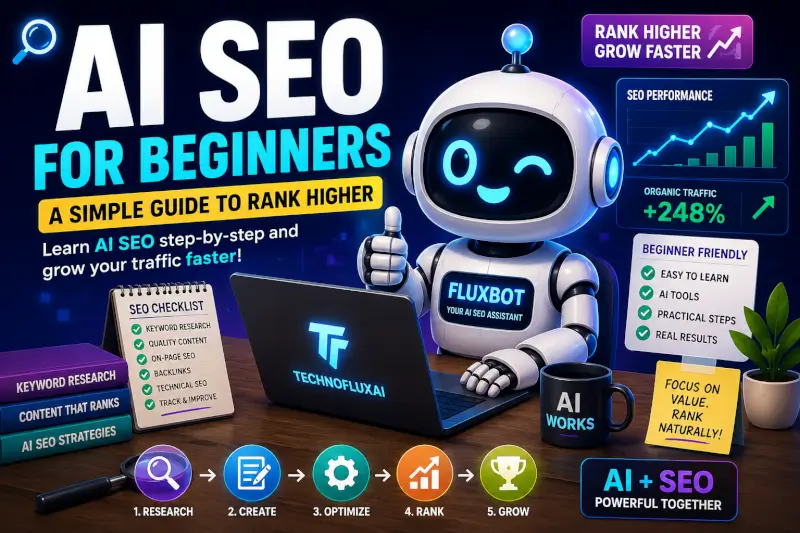
If you’re trying to grow website traffic, rank content on Google, or create articles faster without hiring a large SEO team, AI SEO tools can dramatically simplify the process. In this beginner-friendly guide, you’ll learn how AI SEO workflows actually work, which tools are worth using, common mistakes to avoid, and how creators and businesses are using AI to grow faster in 2026.
Quick Answer
AI SEO uses artificial intelligence tools to help beginners research keywords, organize content, optimize articles, improve rankings, and save time while building better workflows.
The Real Problem
Most beginners fail with SEO because the process feels overwhelming. Keyword research, internal linking, optimization, content structure, meta descriptions, search intent, and content planning quickly become confusing. Many creators also waste time jumping between dozens of AI tools without building a real workflow.
Why Most AI SEO Workflows Fail
The biggest mistake beginners make is relying on AI to fully automate content creation without strategy or editing. AI works best when it supports a workflow instead of replacing human thinking entirely. Publishing low-quality AI content without improving readability, structure, and usefulness rarely produces strong long-term rankings.
How the AI SEO Workflow Actually Works
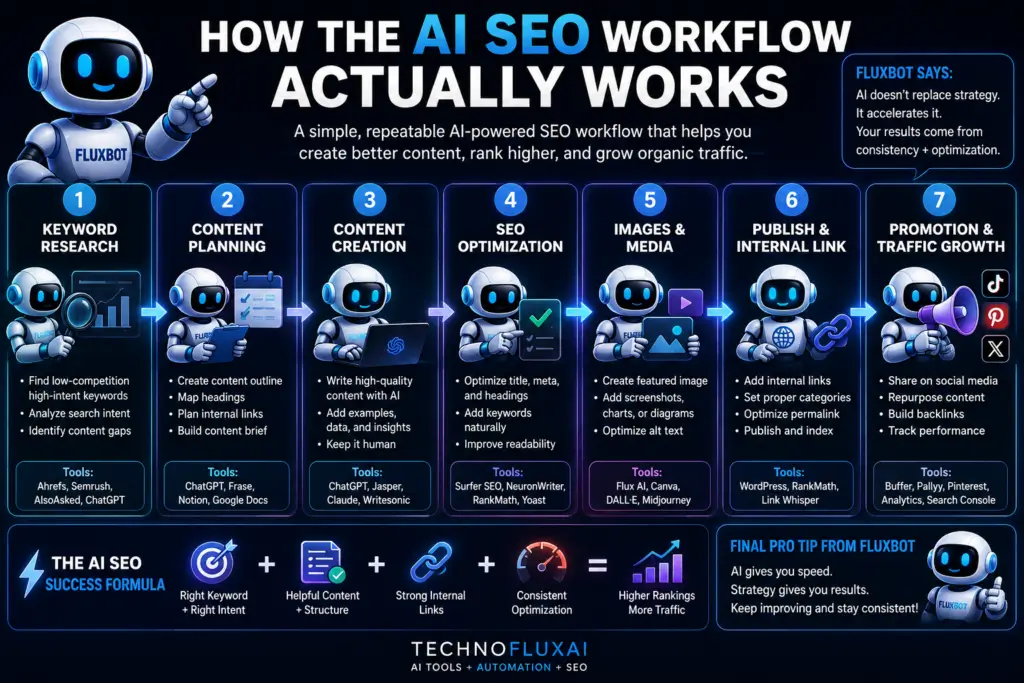
A successful AI SEO workflow usually follows a repeatable system. Research comes first, followed by outlining, writing, optimization, image creation, publishing, internal linking, and promotion. AI tools dramatically speed up these tasks, but consistency and structure matter more than simply using more software.
- Keyword Research
- Content Planning
- SEO Optimization
- Internal Linking
- Featured Images
- Publishing
- TikTok + Pinterest Promotion
Best Uses for AI SEO
- Keyword research
- Meta descriptions
- Blog outlines
- Internal linking
- FAQ generation
- Content optimization
- Competitor analysis
Best AI SEO Tools for Beginners
- ChatGPT – content planning and outlines
- Surfer SEO – optimization guidance
- Frase – content briefs and SERP analysis
- Ahrefs – keyword and competitor research
- Semrush – SEO data and rankings
- NeuronWriter – optimization workflows
- Jasper – AI-assisted writing
What These Tools Are Actually Useful For
Most beginners do not need expensive enterprise SEO platforms immediately. Start simple. ChatGPT works well for brainstorming, outlines, and workflow support. Tools like Ahrefs and Semrush become more useful once you’re publishing consistently and need deeper data. Optimization tools save time, but none of them replace creating useful content for real people.
Best AI Tools for This Topic
These AI tools can help you create content, automate workflows, and grow faster.
- Sanebox – Clean your inbox →
- Everneed AI – Try AI tools →
- CustomGPT – Build your AI agent →
- Pollo AI – Create AI content →
- ChatGPT – Try it here →
? Pro Tip: Use multiple tools together to maximize results.
Real AI SEO Use Cases
Bloggers use AI SEO tools to speed up article creation and improve publishing consistency. Ecommerce stores use AI to optimize product descriptions and category pages. TikTok creators use AI to generate scripts, titles, hashtags, and cross-platform content ideas. Local businesses use AI for lead generation pages and service area content.
Common AI SEO Mistakes
- Publishing raw AI outputs
- Ignoring search intent
- Keyword stuffing
- Buying too many tools
- Weak internal linking
- Automating low-quality processes
My Personal Insight
At TechnofluxAI, we’ve found that AI dramatically improves workflow speed, but editing and strategy still matter heavily. The biggest gains usually come from organization and consistency rather than fully automated publishing. AI is most powerful when used to remove repetitive work while keeping human creativity and real experience involved.
Why Human Editing Still Matters
Search engines increasingly reward helpful content with real insights, realistic expectations, and clear user value. AI can accelerate workflows, but trust, originality, and usefulness still come from human experience and thoughtful editing.
FAQs
Can beginners use AI for SEO?
Yes. Modern AI SEO tools are beginner-friendly and can simplify keyword research, optimization, and content planning.
Will AI SEO improve rankings?
AI can improve workflows and optimization, but rankings still depend on useful content, search intent, and competition.
What is the best beginner AI SEO tool?
ChatGPT is one of the easiest tools for beginners because it helps with brainstorming, outlines, content ideas, and SEO workflows.
Next Steps
The best next step is building a simple repeatable AI workflow instead of chasing dozens of tools. Focus on consistency, optimization, internal linking, and creating genuinely useful content.
Founder Insight: I’ve been working with computers, software, and creative technology since the early days of personal computing and personally test many of the AI tools featured on TechnofluxAI before recommending them.

About the Author
Jon Hicks
Founder of TechnofluxAI.
I’m the creator behind TechnofluxAI, focused on breaking down powerful AI tools, emerging trends, and practical strategies to help creators and entrepreneurs stay ahead in a rapidly evolving digital world.
Follow TechnofluxAI for the latest AI tools & strategies