
Estimated reading time: 7 minutes
Key Takeaways
- GEO stands for Generative Engine Optimization, focusing on optimizing content for AI-generated answers instead of traditional search rankings.
- GEO helps websites become more understandable and useful to AI systems like ChatGPT and Google AI Overviews.
- Key strategies for GEO include answering main questions early, building topic clusters, and using internal links to connect related content.
- GEO content must provide clear answers, useful explanations, updated information, and relevant examples to improve AI understanding.
- GEO and SEO are complementary; the best approach combines both strategies to optimize for human readers and AI systems.
? AI Search & GEO Update
AI search engines are rapidly changing how websites are discovered in 2026. Platforms like ChatGPT, Google AI Overviews, Claude, Perplexity, and Gemini now prioritize structured answers, topical authority, trusted sources, semantic relevance, and conversational content experiences.
Modern SEO is evolving into GEO (Generative Engine Optimization), where websites are optimized not only for rankings, but also for AI citations, summaries, recommendations, and conversational retrieval systems.
- AI search systems favor structured topical clusters
- Internal linking helps AI understand relationships between pages
- Fresh content updates improve visibility signals
- Helpful summaries and FAQs improve AI retrieval
- Conversational content performs better for AI search engines
Quick Answer
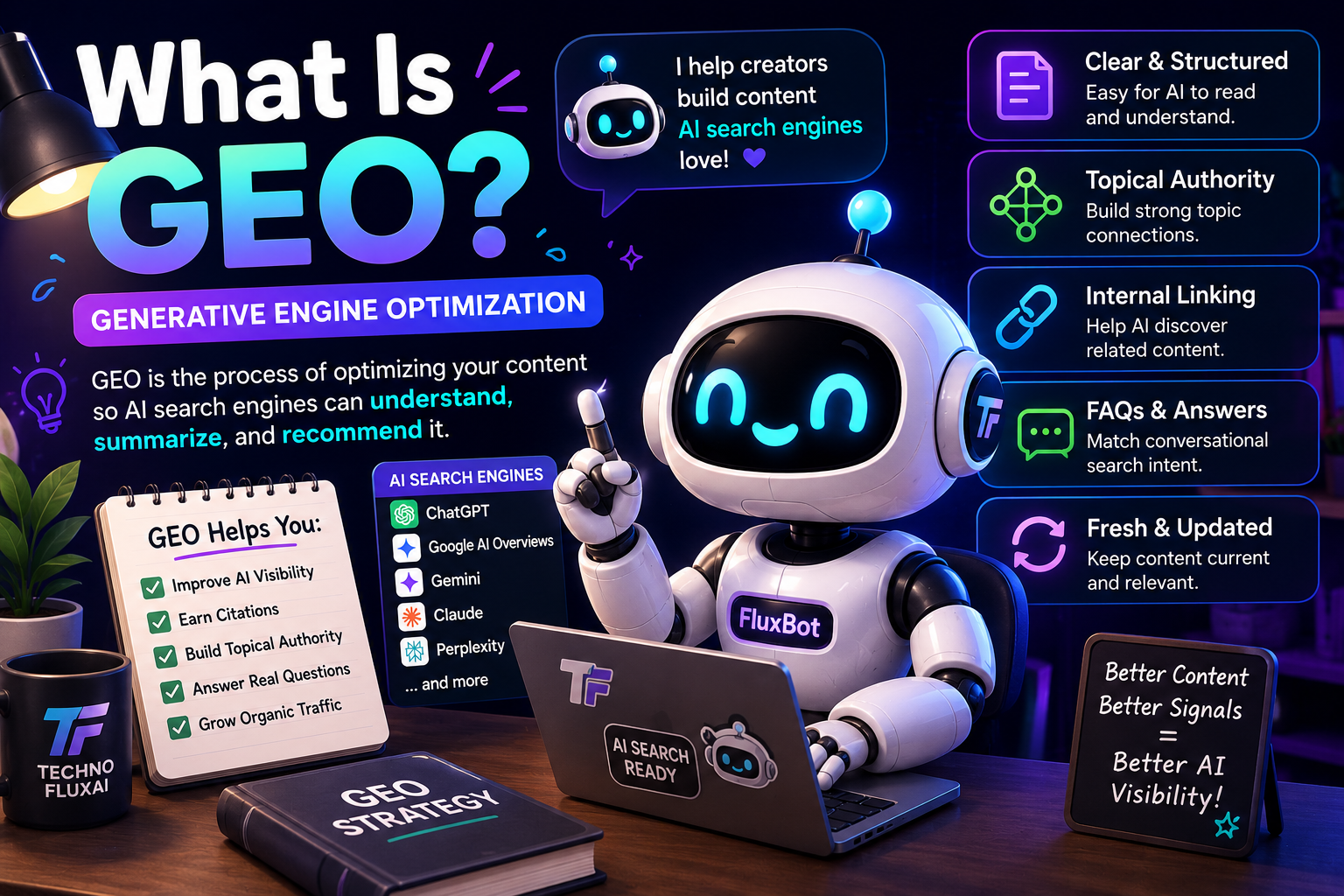
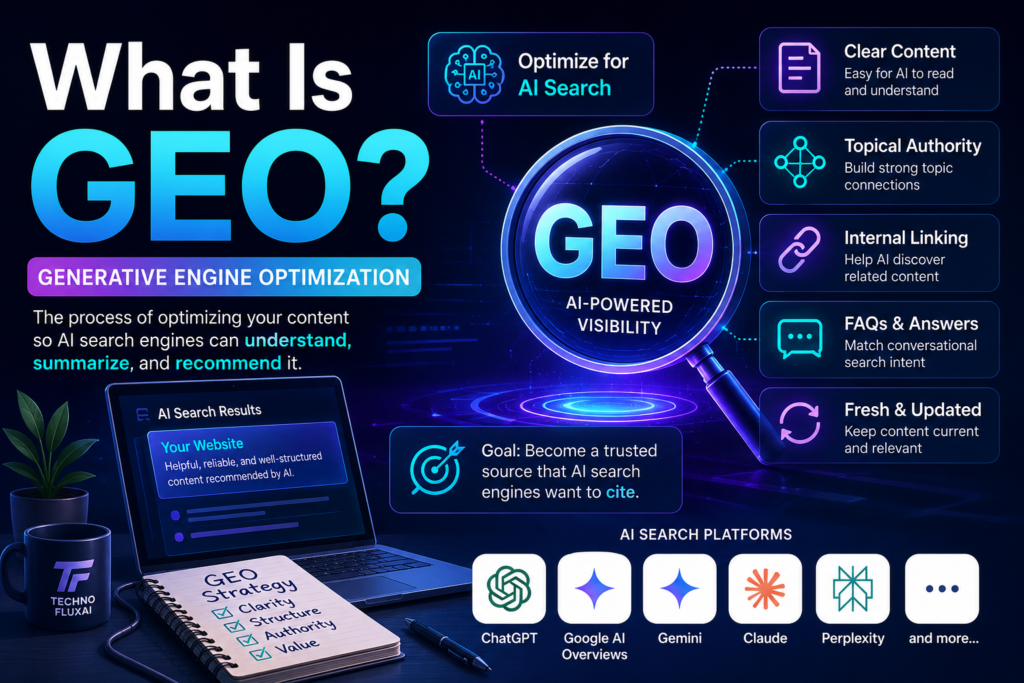
GEO stands for Generative Engine Optimization. It is the process of optimizing your website and content so AI search systems like ChatGPT, Google AI Overviews, Gemini, Claude, and Perplexity can better understand, summarize, recommend, and cite your content.
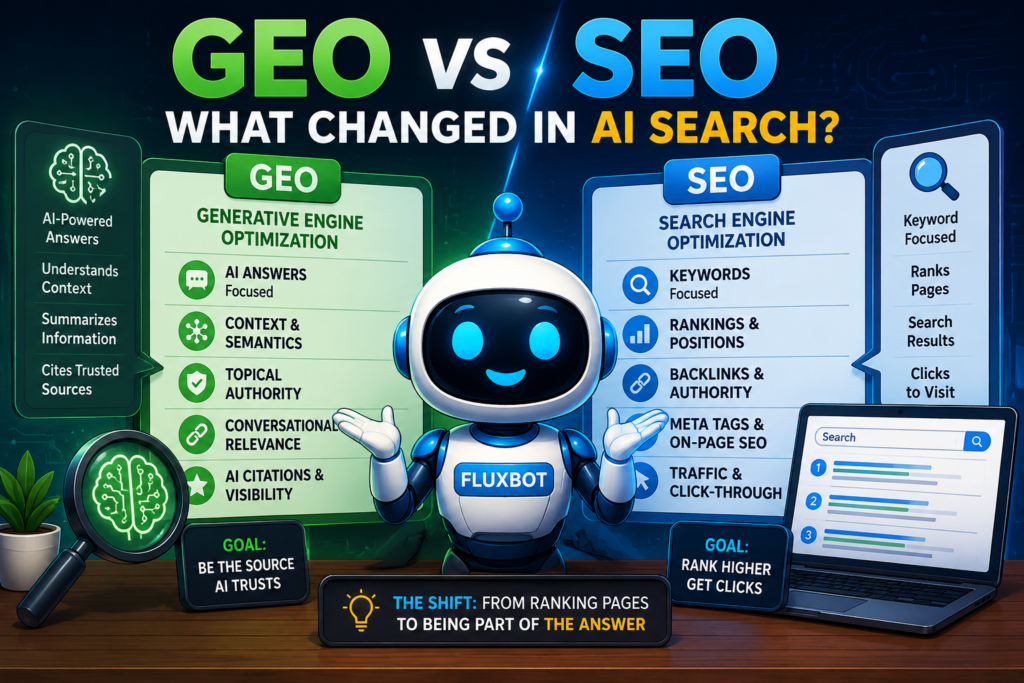
Traditional SEO focuses on ranking in search engines. GEO focuses on being useful, clear, structured, and trustworthy enough to appear in AI-generated answers.
What Is GEO?
GEO, or Generative Engine Optimization, is a newer form of search optimization built for AI-powered search tools. Instead of only trying to rank on Google’s traditional blue links, GEO helps content become easier for AI systems to understand and use in answers.
When someone asks ChatGPT, Gemini, Claude, Perplexity, or Google AI Overviews a question, these systems often summarize information from different sources. GEO helps your website become a better source for those summaries.
Why GEO Matters in 2026
Search is changing fast. More people are asking AI tools for answers instead of only typing keywords into Google. That means websites need to be written in a way that supports both traditional search engines and AI answer systems.
GEO matters because AI tools look for content that is clear, useful, structured, and connected to a broader topic. If your site explains a subject well and supports it with related pages, AI systems have a better chance of understanding your expertise.
GEO vs SEO: What Is the Difference?
| SEO | GEO |
|---|---|
| Optimizes for traditional search rankings | Optimizes for AI-generated answers and citations |
| Focuses on keywords, links, titles, and rankings | Focuses on clarity, topical authority, structure, and usefulness |
| Targets Google search results | Targets ChatGPT, AI Overviews, Gemini, Claude, and Perplexity |
| Often built around search queries | Often built around questions, summaries, and conversational answers |
How GEO Works
GEO works by making your content easier for AI systems to process. AI tools need to understand what your page is about, how it relates to other topics, and whether it provides a helpful answer.
Strong GEO content usually includes:
- Clear answers near the top of the page
- Simple explanations
- Helpful headings
- FAQ sections
- Internal links to related pages
- Updated information
- Examples and use cases
- Topical clusters
- Trusted external references
What AI Search Systems Look For
AI search systems do not only look for keywords. They look for meaning, context, relationships, and usefulness.
Your content becomes stronger when it clearly answers:
- What is this topic?
- Why does it matter?
- How does it work?
- Who should use it?
- What are the best examples?
- What should someone do next?
Best GEO Strategies for Beginners
1. Answer the Main Question Early
Start every important page with a direct answer. This helps readers and AI systems understand the purpose of the page immediately.
2. Build Topic Clusters
Do not create isolated posts. Create groups of related pages that support one another. For example, a GEO cluster might include pages about ChatGPT optimization, AI search visibility, AI citations, and how AI systems choose sources.
3. Use Internal Links
Internal links help search engines and AI tools understand how your pages connect. They also guide readers deeper into your website.
4. Add FAQs
FAQ sections match the way people ask questions inside AI tools. They also make your content easier to extract and summarize.
5. Keep Content Updated
AI search changes quickly. Updating important pages every few months helps keep your content useful and current.
6. Write Like a Human
Simple, helpful writing performs better than robotic content. Use clear explanations, short paragraphs, and practical examples.
Examples of GEO-Friendly Content
- What Is GEO?
- How to Optimize Content for ChatGPT
- How ChatGPT Chooses Sources
- Best GEO Tools for AI Search
- AI Search Optimization for Beginners
- GEO vs SEO
- Best AI Workflow Tools
- AI Productivity Tools for Businesses
Common GEO Mistakes
- Writing thin articles with no real explanation
- Creating random posts that do not connect to a cluster
- Ignoring internal links
- Using confusing headings
- Publishing outdated information
- Only writing for keywords instead of real questions
- Skipping FAQs and summaries
- Creating duplicate pages with the same search intent
How TechnofluxAI Uses GEO
TechnofluxAI uses GEO by building connected content clusters around AI tools, AI workflows, productivity, automation, creator tools, and AI search optimization.
Instead of treating every article as a separate post, TechnofluxAI connects related pages together through internal links, reusable update blocks, comparison guides, workflow articles, and beginner-friendly explanations.
This creates a stronger topic ecosystem for both users and AI search systems.
Related GEO Guides
Optimize for ChatGPT
Learn how to structure content for AI search systems.
How ChatGPT Chooses Sources
Understand how AI systems evaluate content.
Best GEO Tools
Explore tools for AI search optimization.
AI Search Optimization
A beginner-friendly guide to AI visibility.
Useful External Resources
Google Search Central
Official search documentation from Google.
FAQs
What does GEO stand for?
GEO stands for Generative Engine Optimization. It means optimizing content for AI-generated answers, summaries, recommendations, and citations.
Is GEO the same as SEO?
No. SEO focuses on traditional search rankings. GEO focuses on helping AI systems understand, summarize, and recommend your content.
Does GEO replace SEO?
No. GEO does not replace SEO. The best strategy is to use both together.
How do you optimize for GEO?
You optimize for GEO by using clear answers, strong headings, topical clusters, internal links, FAQs, updated content, and helpful explanations.
Why is GEO important?
GEO is important because more people are using AI search tools to find answers, compare products, and discover websites.
Final Thoughts
GEO is becoming an important part of modern search strategy. As AI search systems grow, websites need to be clear, helpful, structured, and connected to strong topic clusters.
The best GEO strategy is simple: answer real questions, build useful pages, connect related content, update important articles, and make your website easy for both humans and AI systems to understand.
Founder Insight: I’ve been working with computers, software, and creative technology since the early days of personal computing and personally test many of the AI tools featured on TechnofluxAI before recommending them.

About the Author
Jon Hicks
Founder of TechnofluxAI.
I’m the creator behind TechnofluxAI, focused on breaking down powerful AI tools, emerging trends, and practical strategies to help creators and entrepreneurs stay ahead in a rapidly evolving digital world.
Follow TechnofluxAI for the latest AI tools & strategies