
Estimated reading time: 8 minutes
Key Takeaways
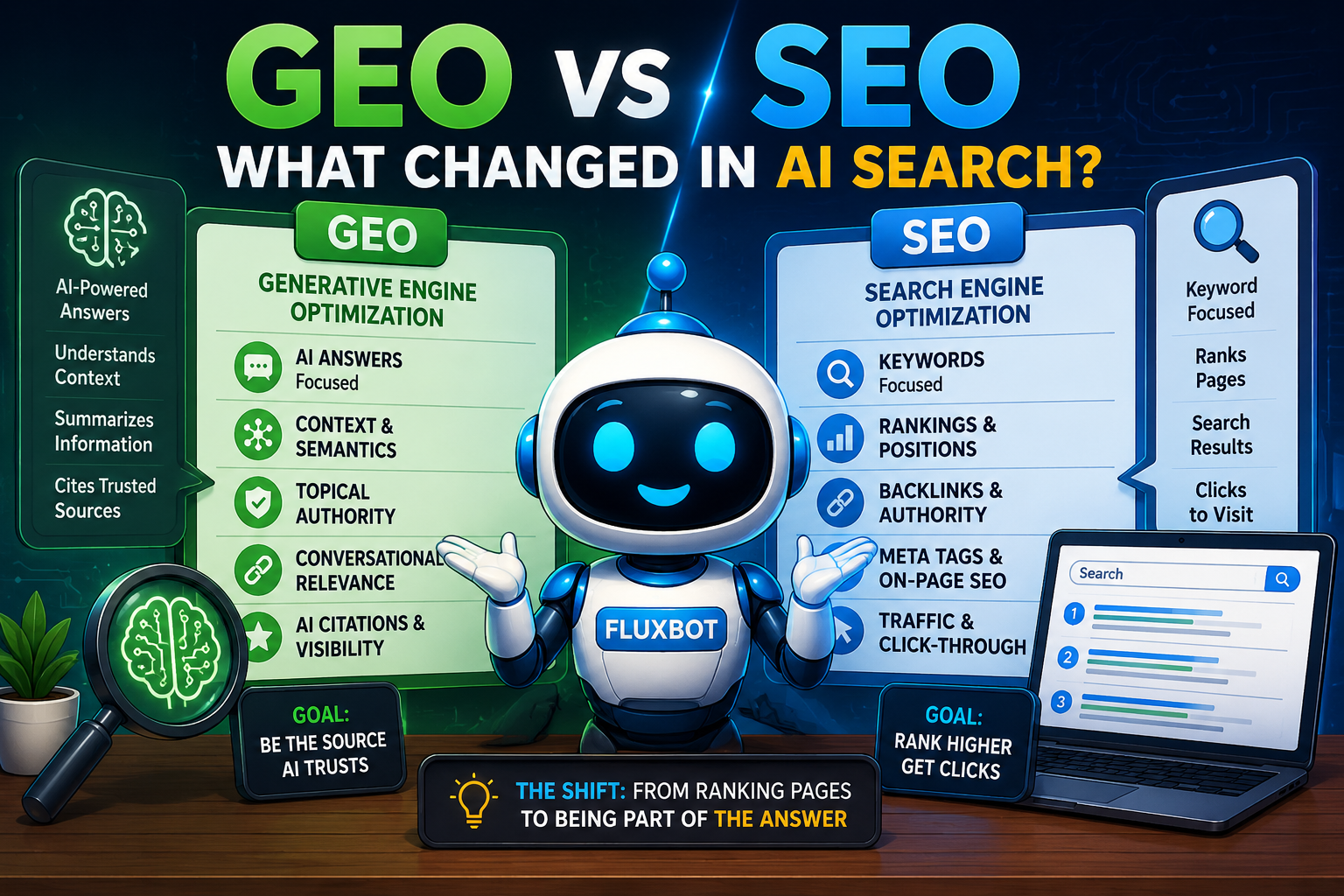
- Traditional SEO focuses on ranking webpages, while GEO emphasizes helping AI systems retrieve and understand content.
- AI-powered search is changing user behavior, with people asking direct questions instead of sifting through links.
- GEO integrates conversational formatting, topical authority, and structured content, reflecting the needs of AI systems.
- Despite the rise of GEO, traditional SEO remains essential for indexing, crawlability, and authority.
- Successful websites will blend traditional SEO techniques with GEO strategies to adapt to evolving search behaviors.
? AI Search & GEO Update
AI search engines are rapidly changing how websites are discovered in 2026. Platforms like ChatGPT, Google AI Overviews, Claude, Perplexity, and Gemini now prioritize structured answers, topical authority, trusted sources, semantic relevance, and conversational content experiences.
Modern SEO is evolving into GEO (Generative Engine Optimization), where websites are optimized not only for rankings, but also for AI citations, summaries, recommendations, and conversational retrieval systems.
- AI search systems favor structured topical clusters
- Internal linking helps AI understand relationships between pages
- Fresh content updates improve visibility signals
- Helpful summaries and FAQs improve AI retrieval
- Conversational content performs better for AI search engines
Search is evolving rapidly as AI-powered systems change how users discover information online.
For years, traditional SEO focused primarily on helping webpages rank higher in search engine results pages. Rankings, keywords, backlinks, and metadata became the foundation of modern search optimization.
Today, AI systems like ChatGPT, Google AI Overviews, Gemini, Claude, and Perplexity are changing that model.
Instead of simply displaying lists of links, AI systems increasingly generate conversational answers using information gathered from multiple sources across the web.
This shift has created a growing focus on GEO, or Generative Engine Optimization.
What Is SEO?
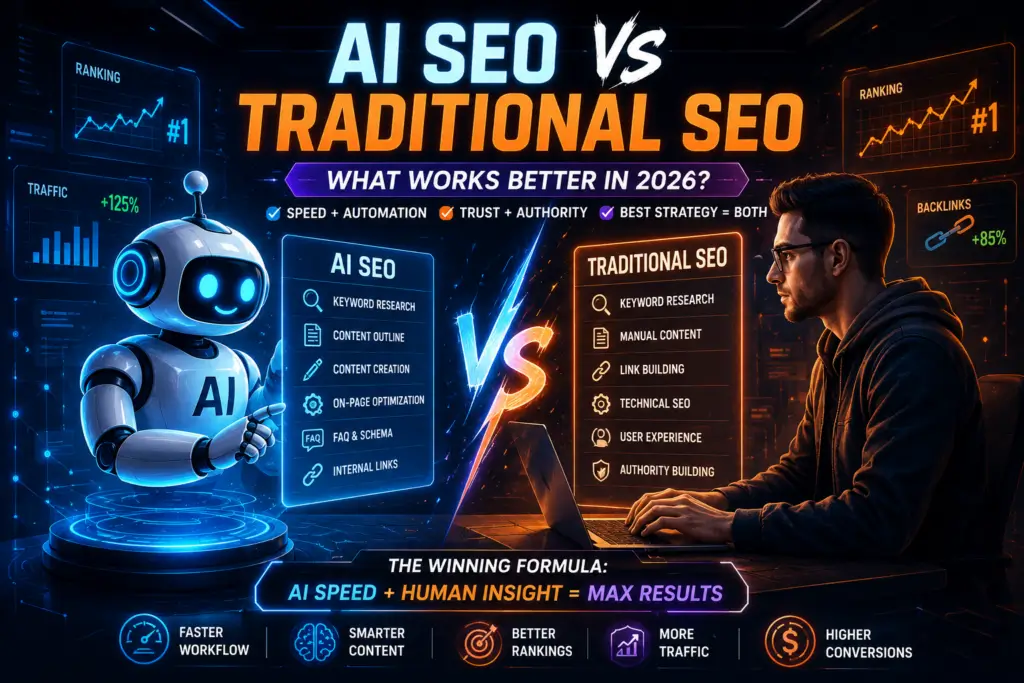
SEO stands for Search Engine Optimization.
Traditional SEO focuses on improving visibility inside search engines like Google and Bing.
Common SEO strategies include:
- keyword optimization
- backlinks
- title tags
- meta descriptions
- technical SEO
- page speed
- content depth
- internal linking
The primary goal of SEO has historically been:
rank higher in search results.
For years, websites competed heavily for:
- page one rankings
- featured snippets
- organic traffic
- click-through rates
Traditional SEO is still extremely important today.
However, AI-powered search is changing how users interact with information online.
What Is GEO?
GEO stands for Generative Engine Optimization.
Instead of focusing only on rankings, GEO focuses on helping AI systems:
- understand content
- retrieve information
- summarize answers
- recommend sources
- generate conversational responses
GEO is designed for AI-driven systems such as:
- ChatGPT
- Google AI Overviews
- Gemini
- Claude
- Perplexity
As conversational AI becomes more common, websites are increasingly competing to become part of AI-generated answers.
However, conversational AI systems now analyze content differently than traditional search engines. For example, modern AI tools evaluate clarity, structure, semantic relationships, and topical depth instead of relying heavily on keyword repetition alone. Because of this shift, creators should focus on writing naturally while organizing information clearly for both users and AI systems.
In addition, websites that answer questions directly may improve AI visibility over time. Meanwhile, structured content clusters help AI systems understand relationships between articles and concepts. As a result, interconnected GEO strategies are becoming increasingly important for long-term search growth.
The Biggest Difference Between GEO and SEO
Traditional SEO focused heavily on:
“Can this page rank?”
GEO focuses more on:
“Can this content help answer the question?”
That shift changes how websites should approach content creation.
AI systems increasingly favor content that is:
- structured clearly
- easy to summarize
- conversational
- semantically relevant
- trustworthy
- topically authoritative
This is why GEO often emphasizes:
- topical authority
- FAQ formatting
- entity relationships
- semantic relevance
- structured information
more than simple keyword repetition.
How AI Search Changed User Behavior
One of the biggest reasons GEO is growing is because user behavior is changing.
Instead of opening multiple search results, users increasingly ask AI systems direct questions such as:
- “What are the best AI tools?”
- “How does GEO work?”
- “What changed in AI search?”
- “How do I optimize for ChatGPT?”
AI systems then generate conversational answers by combining information from multiple sources.
This creates a new type of competition:
becoming visible inside AI-generated answers.
Google AI Overviews Changed Search
Google AI Overviews accelerated the transition toward AI-assisted search.
Instead of showing only blue links, Google increasingly provides summarized AI-generated answers directly inside the search results.
This means users may receive answers without clicking through multiple websites.
As a result, websites now need to optimize for:
- AI readability
- semantic clarity
- topical depth
- structured formatting
- conversational relevance
This is one reason GEO has become such an important emerging strategy.
SEO Still Matters
GEO is not replacing SEO completely.
Traditional SEO still matters because:
- webpages still need indexing
- technical SEO still affects crawlability
- backlinks still help authority
- page speed still impacts user experience
- search rankings still drive traffic
In reality, GEO works alongside SEO rather than replacing it entirely.
The websites most likely to succeed are those combining:
- traditional SEO
- semantic SEO
- structured content
- conversational formatting
- AI search optimization
together.
How GEO Content Is Different
GEO-focused content often looks different from older SEO content.
Instead of:
- keyword stuffing
- robotic wording
- repetitive phrases
GEO content tends to prioritize:
- direct answers
- natural language
- semantic relationships
- conversational structure
- clear explanations
- topic clusters
AI systems prefer content that is easier to understand and summarize naturally.
Topical Authority Matters More Than Ever
One of the largest shifts in AI search is the growing importance of topical authority.
AI systems increasingly look for websites that demonstrate deep knowledge around a subject.
For example, a website publishing:
- GEO tutorials
- AI search guides
- workflow examples
- AI visibility strategies
- related internal links
may appear more authoritative than a site with one isolated article.
This is why interconnected topic clusters are becoming increasingly valuable.
Examples of GEO Optimization
Here are examples of modern GEO strategies:
Structured FAQ Sections
AI systems often retrieve information from:
- FAQs
- definitions
- glossary sections
- direct answers
Conversational Formatting
Content written naturally is often easier for AI systems to summarize.
Internal Linking
Strong internal links help AI systems understand relationships between topics.
Semantic SEO
Using related concepts naturally helps improve contextual understanding.
Examples:
- AI search
- conversational search
- AI visibility
- answer engines
- semantic SEO
Clear Headings
Well-organized headings improve readability for both humans and AI systems.
GEO and Zero-Click Search
AI search is increasing the number of zero-click experiences online.
Users may now:
- receive answers directly
- summarize information instantly
- compare products inside AI systems
- avoid opening multiple webpages
This creates both challenges and opportunities for websites.
The opportunity:
becoming a trusted AI-cited source.
Why Businesses Should Care About GEO
Businesses that adapt early to AI search may gain significant advantages.
Potential benefits include:
- improved AI visibility
- stronger topical authority
- increased brand recognition
- higher trust signals
- future-proof search positioning
As AI systems become more integrated into search, websites that remain optimized only for older SEO strategies may struggle over time.
Personal Insight
It makes sense to me that search behavior is evolving because I have already experienced it personally while building AI workflows and applications. During some projects, I found myself barely using traditional search engines at all. Instead, I relied heavily on conversational AI systems to solve problems, organize workflows, and research information faster.
That behavioral shift feels extremely important.
The internet is gradually moving away from simply browsing webpages toward interacting directly with AI systems that retrieve and summarize information conversationally.
That changes how websites need to think about visibility.
The challenge now is no longer just ranking in search engines. The challenge is becoming understandable, useful, and trustworthy enough for AI systems to reference confidently.
Frequently Asked Questions
What is the difference between GEO and SEO?
SEO focuses primarily on ranking webpages in search engines.
GEO focuses on helping AI systems retrieve, understand, summarize, and recommend content inside conversational answers.
Is SEO becoming obsolete?
No. SEO is evolving rather than disappearing.
Traditional SEO still matters, but AI search optimization is becoming increasingly important.
What does GEO stand for?
GEO stands for Generative Engine Optimization.
It refers to optimizing content for AI-powered search systems and conversational answer engines.
Why is AI search changing SEO?
AI systems increasingly generate direct answers instead of only displaying lists of links.
This changes how websites gain visibility online.
How do I optimize for AI search?
Helpful strategies include:
- creating structured content
- answering questions directly
- improving internal linking
- building topical authority
- using conversational formatting
- strengthening semantic relevance
Final Thoughts
The shift from traditional SEO toward AI-assisted search may become one of the biggest transformations in modern digital marketing.
SEO still matters, but search is becoming increasingly conversational, semantic, and AI-driven.
The websites most likely to succeed will be those that combine:
- traditional SEO
- structured content
- semantic relevance
- topical authority
- AI search optimization
into a unified long-term strategy.
Founder Insight: I’ve been working with computers, software, and creative technology since the early days of personal computing and personally test many of the AI tools featured on TechnofluxAI before recommending them.